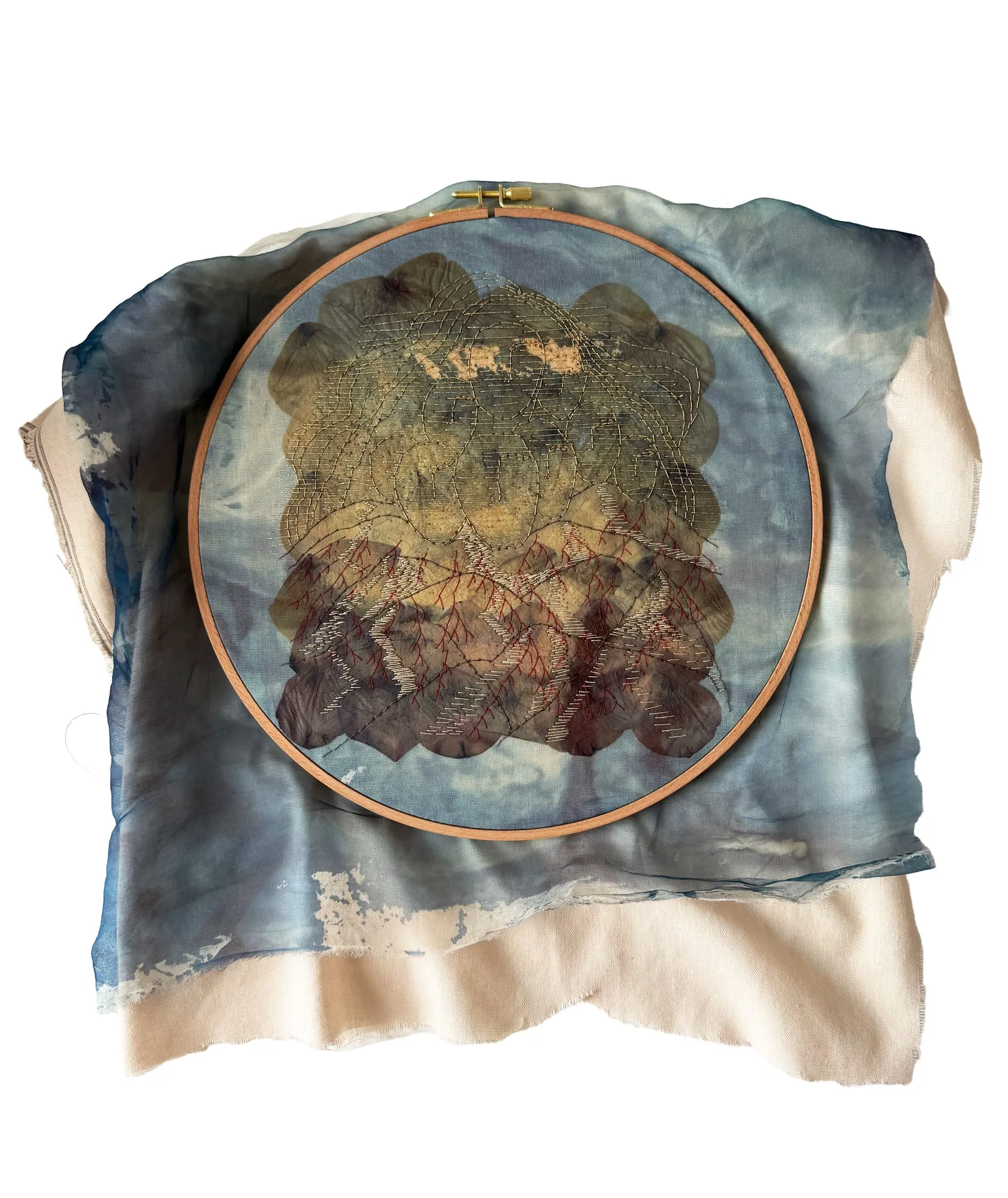
Dust (Version I)

Some versions of us dissolve quietly.
Not into something new — but into residue.
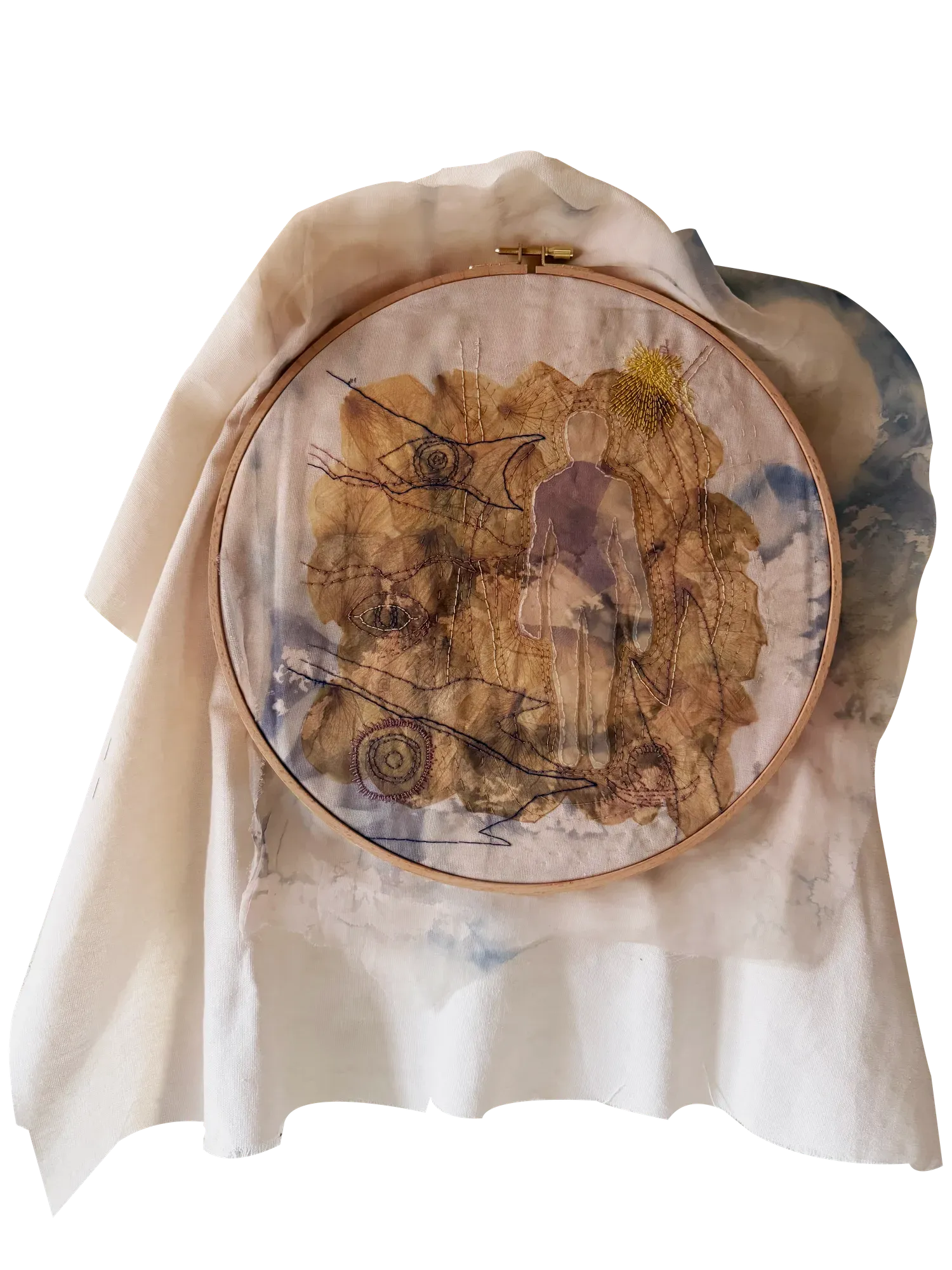
This work approaches identity as something porous and reversible rather than fixed. Instead of a clear sequence of cause and effect, it imagines the self as a zone of fluctuation, where several potential directions remain active at once. Choice does not erase alternatives; it only pushes them out of sight.
The figure here is not doubled, but internally unsettled. Its transparency suggests a body that has not fully agreed with itself — a form still negotiating its own outline. What appears as absence is not loss, but latency: a state of waiting, of unfinished articulation. The body carries traces of other lives it almost entered, as if they were stored in its skin.
The stitched marks do not describe anatomy. They behave more like residues of motion — hesitant gestures, interrupted trajectories, thoughts that turned back on themselves. These lines imply that becoming is never smooth. It is marked by pauses, corrections, and small acts of resistance against a single, coherent narrative.
The eye does not belong to the figure. It floats as an impersonal observer, registering the instability of the scene. It is less a symbol of consciousness than a sign of exposure — the feeling of being seen while still in the process of forming. Under this gaze, identity remains provisional, open-ended, and slightly vulnerable.
The work holds onto that fragile interval: the moment when the self has not yet settled, when multiple versions still overlap, and the future has not fully committed to one shape.
2026
Textile installation: textile, threads, dried flowers
Approximate size: 30 cm x 40 cm

Blue (Version I)
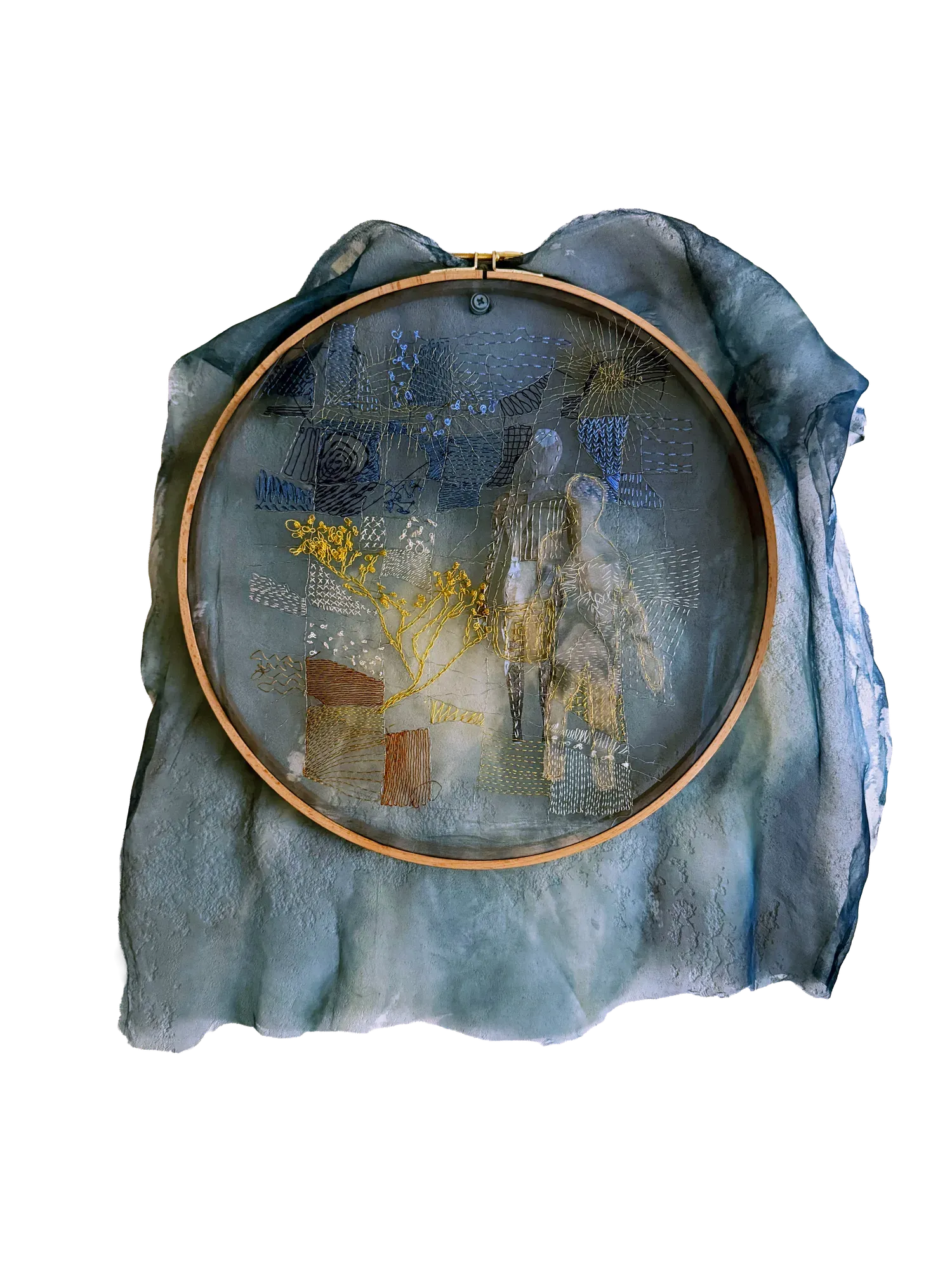
In this work I think of reality as a field of overlapping probabilities rather than a single continuous line. Every decision creates a subtle fork: one version of me steps in one direction, another slips into a different branch and disappears from the visible scene. We usually continue as if only one path exists, yet the sense of “what could have been” keeps vibrating somewhere at the back of consciousness.
The two figures belong to this split moment. They are not two separate people, but two neighbouring selves generated by the same choice: the one who steps into the chosen trajectory and the one who turns away and remains unrealised. One body exists on the surface of the work, in the “present tense”; the other is buried underneath, like an afterimage or an echo. For me this layering is important: it suggests that discarded versions of ourselves never vanish completely – they remain stitched into the underside of our lives, affecting how we move through the world even when we cannot see them.
The eye introduces a third position: the witnessing gaze that observes this constant branching. It is neither fully internal nor fully external; it looks at my own becoming almost as if it belonged to another intelligence, one that can hold several timelines at once. Under this gaze, identity is no longer a stable core but a sequence of provisional states, each one slightly different from the previous. The work lives inside that threshold, where yesterday’s self, today’s self, and the unrealised double coexist for a brief moment before drifting apart.
2025
Textile installation: textile, threads
Approximate size: 30 cm x 40 cm
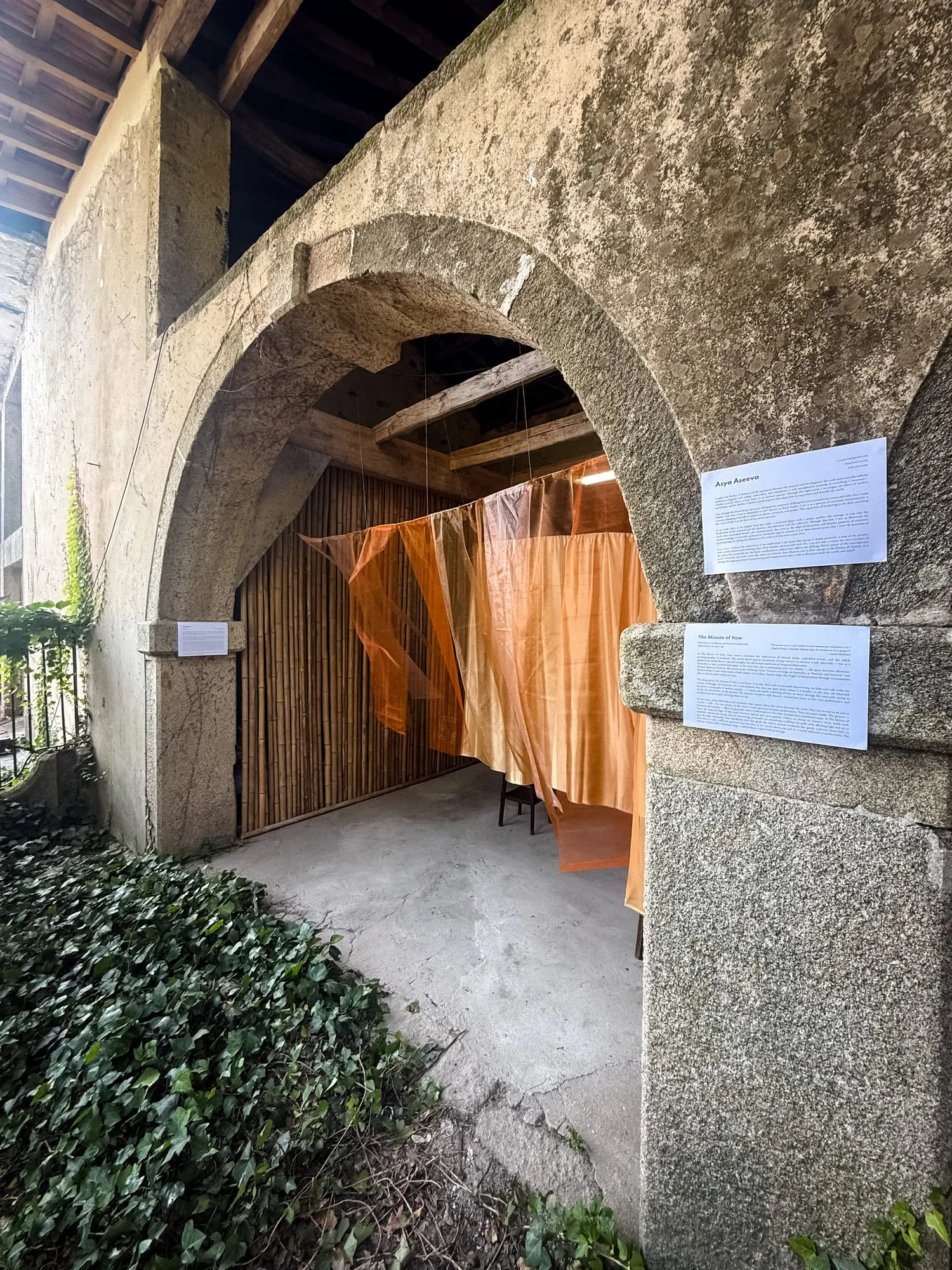
The minute of now
The present is not a well-marked moment between past and future. It is a fragile frontier, constantly slipping away the moment we try to grasp it.
— Gaston Bachelard
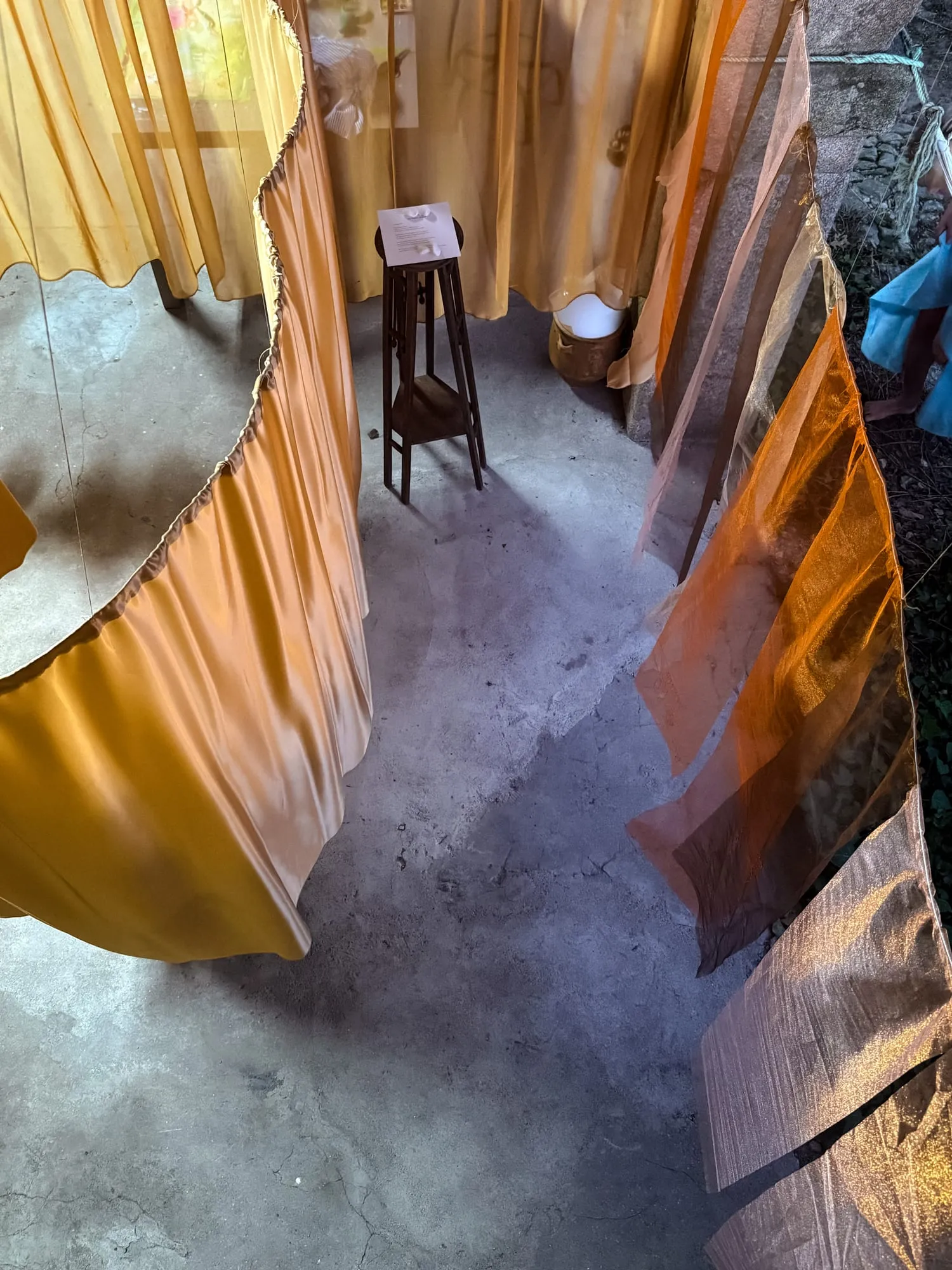
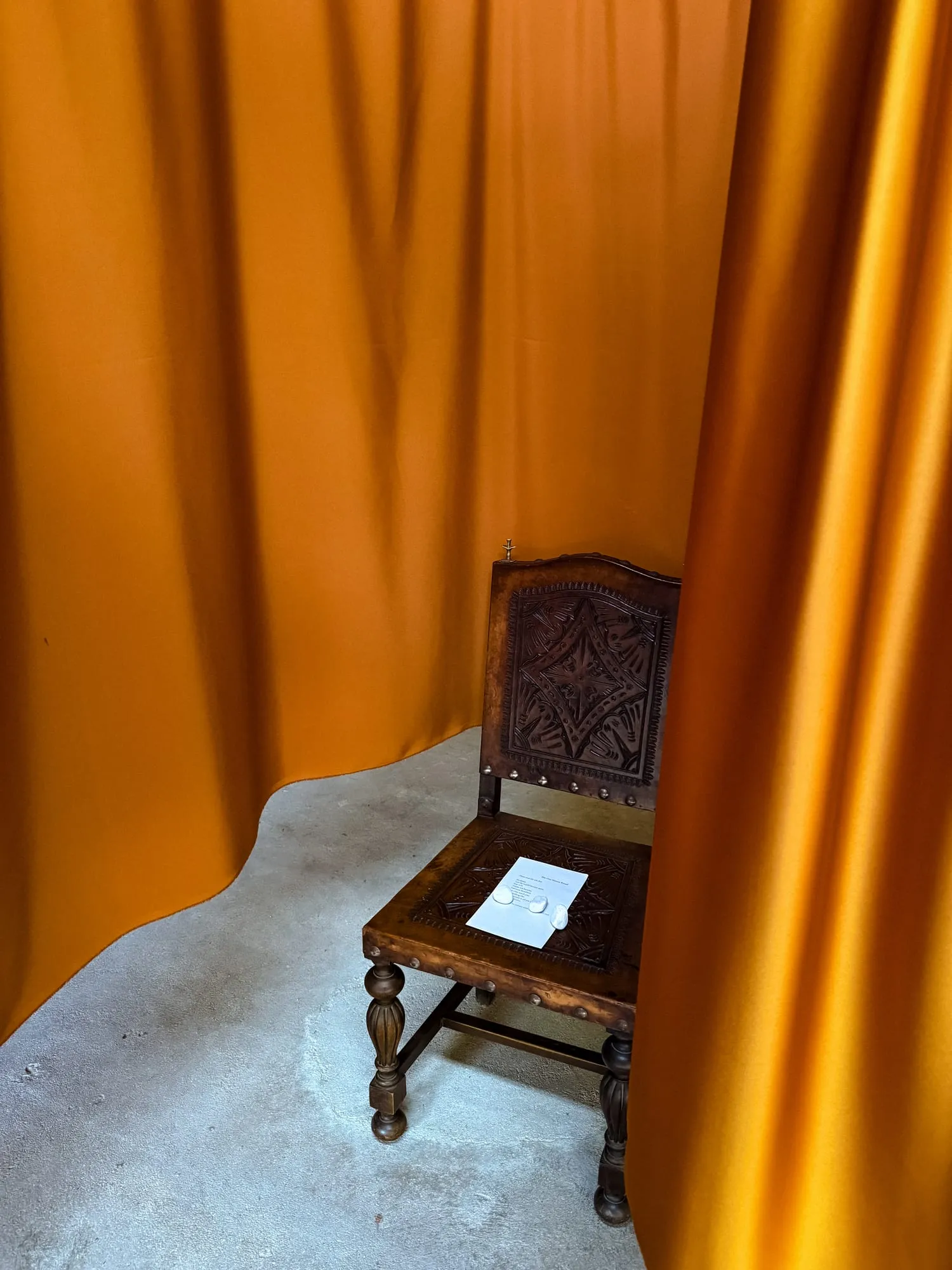
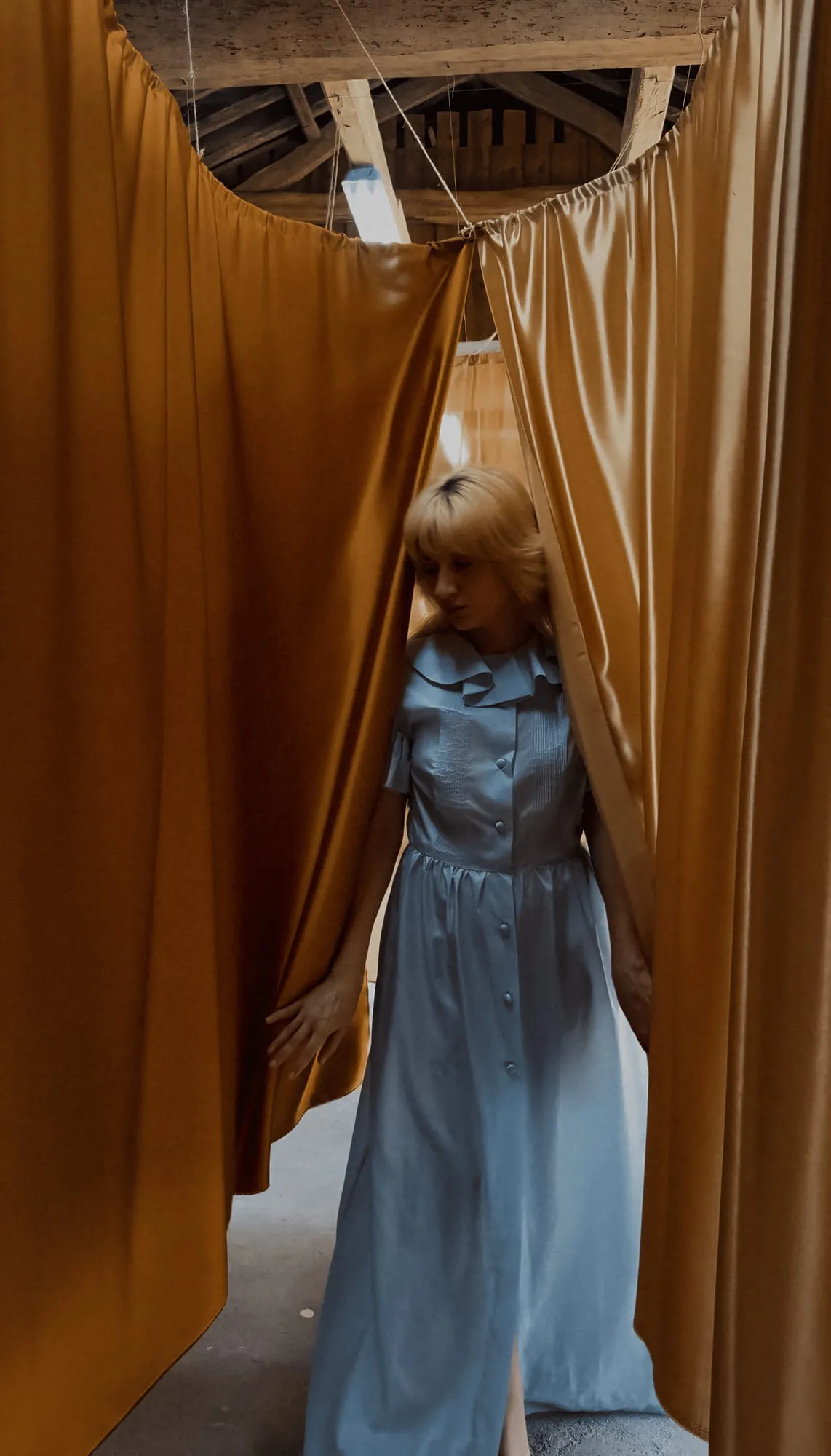
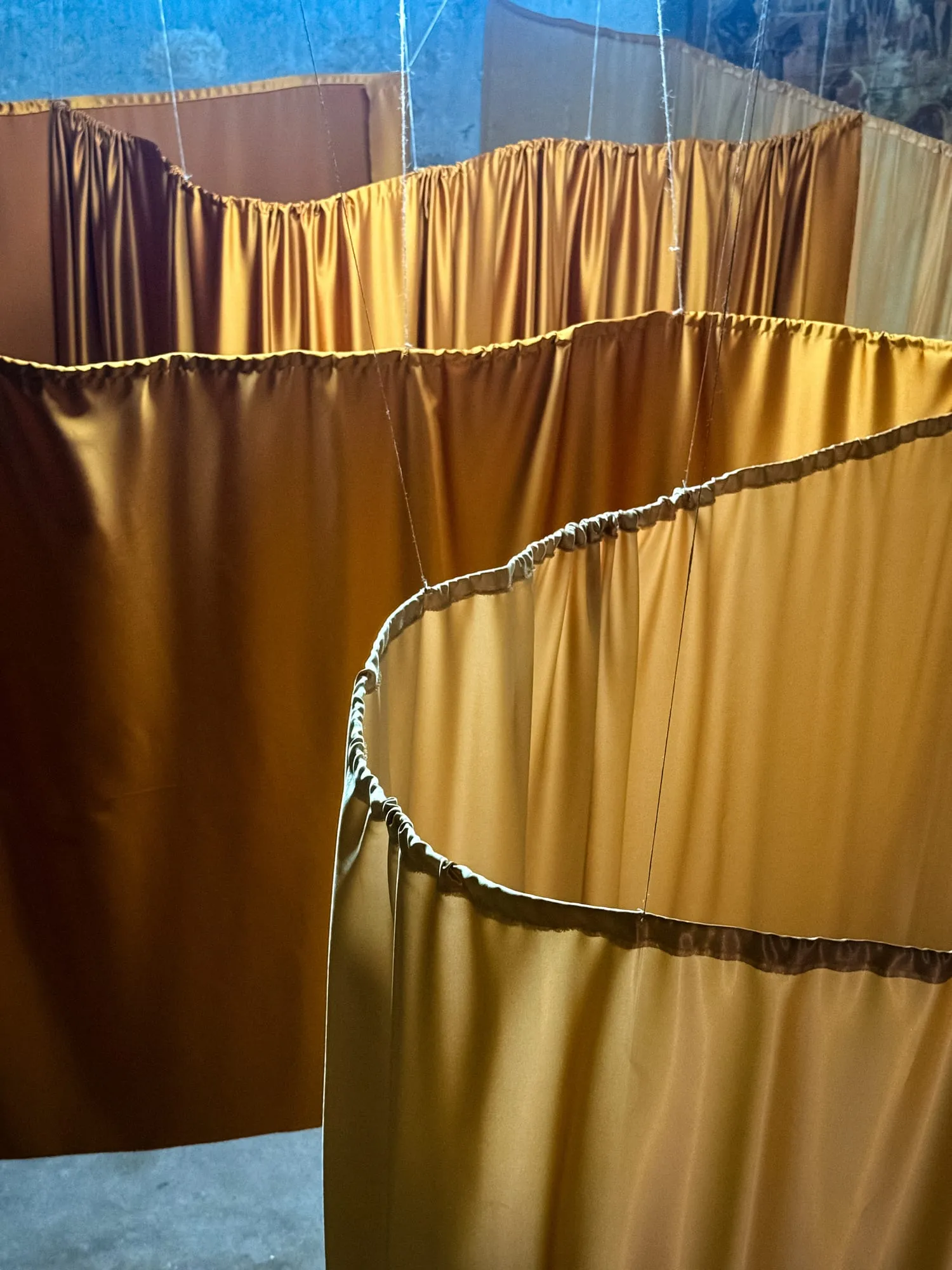
This textile-based spatial installation invites visitors to traverse a soft labyrinth — not as a puzzle to be solved, but as a spatial metaphor for the human condition of temporal dislocation. Liminality is not a transitional phase to be overcome, but a continuous state we inhabit — the space between identities, between gestures, between then and not-yet. Echoing Victor Turner’s writings on liminality and Merleau-Ponty’s view of the body as both subject and surface, I maps this fragile in-betweenness through environments that are felt as much as they are seen.
The labyrinth in The Minute of Now is not linear. It is soft, slow, and intentionally disorienting. Its folds and veils evoke the texture of thought, of hesitation, of a consciousness that does not quite know where it is headed. In this way, the labyrinth becomes a cartography of modern anxiety — a visual and tactile rendering of how we move through life constantly trying to escape the discomfort of the present. We distract ourselves with futures, romanticize pasts, or flee into performance and productivity, never quite arriving where we are.
2025
Participatory installation, performative instruction
Approximate size: 3m x 5m
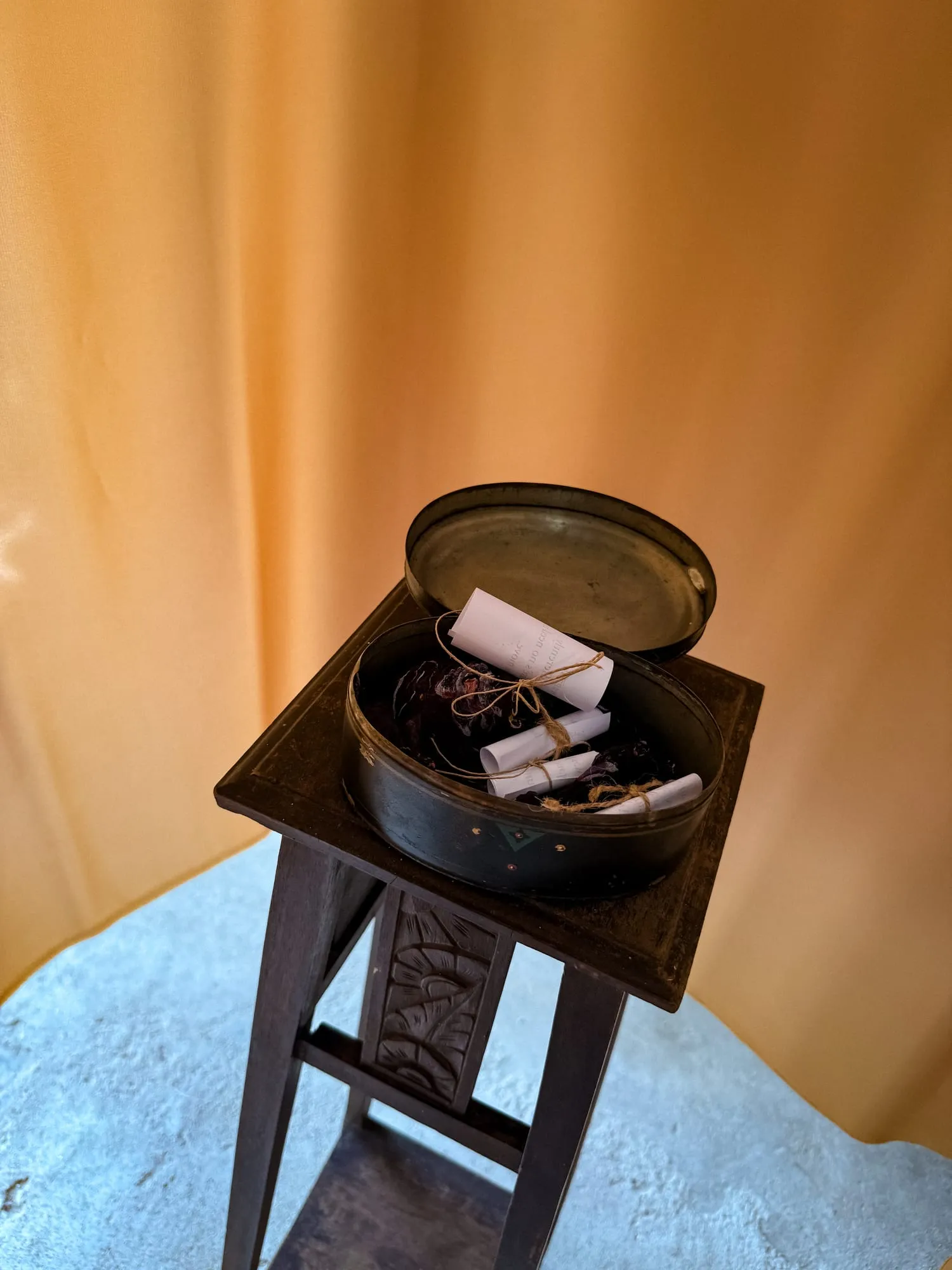
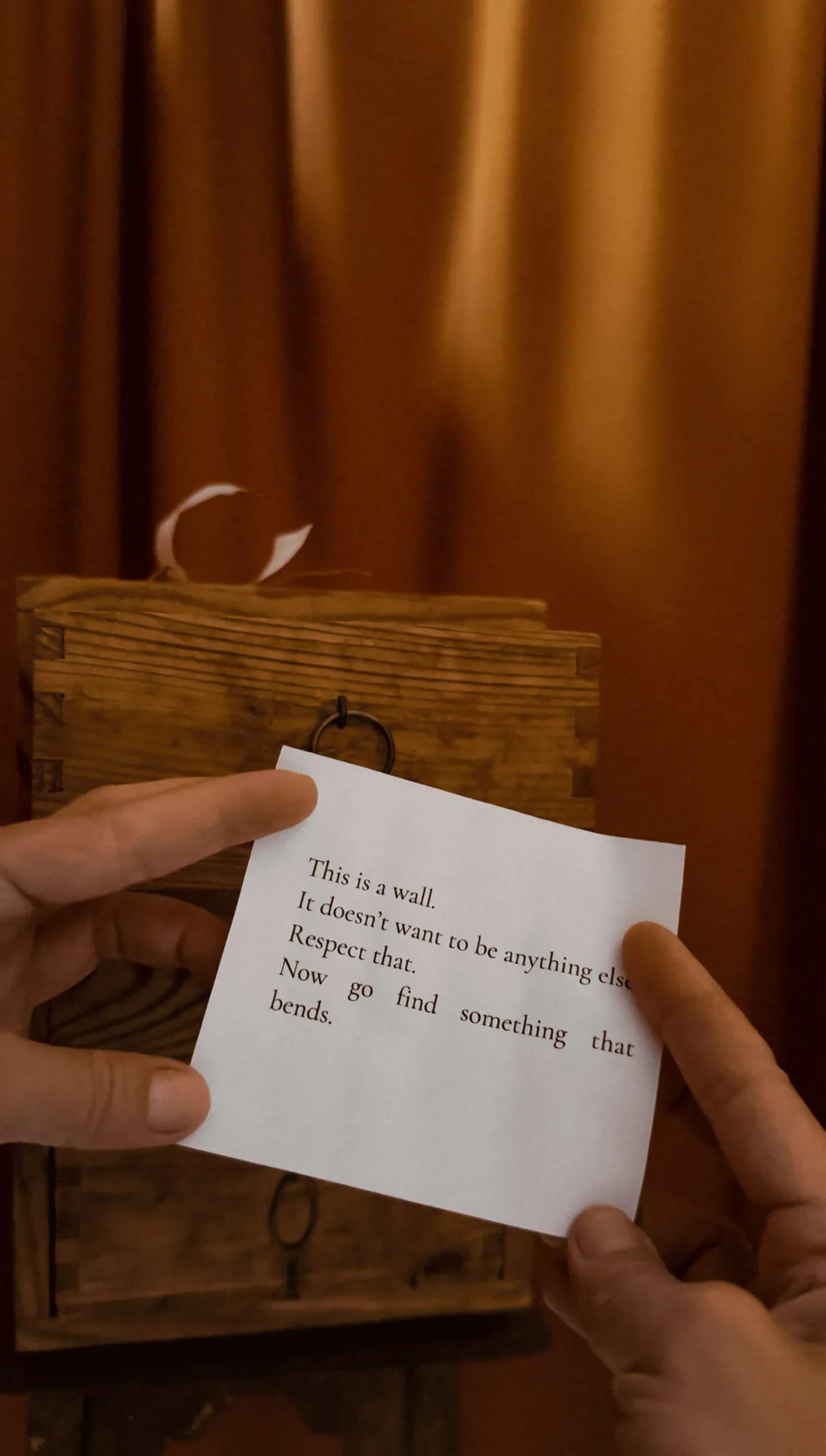
At the center of the labyrinth is not an answer, but a pause. Here, the viewer becomes the work. They are invited to sit and to remain — still for one minute. In this minor ritual, presence becomes performative. Time becomes visible. The gesture — minimal and intimate — offers no spectacle, only a confrontation with what remains when movement stops. This act of “being-with-time” echoes my larger artistic practice, which often lingers at the seams of transformation — in stitched silhouettes, layered collages, and installations that trace the invisible structures of memory and change. In The Minute of Now, the material logic of her work becomes spatial and participatory. Fabric, as always in my work, holds both symbolic and sensual charge: soft yet structuring, permeable yet containing, it defines the path while allowing light and air to pass through.
Ultimately, this installation does not guide the viewer toward revelation but gently redirects them back to themselves. It asks a difficult question: Can you bear to be exactly where you are? In a world addicted to acceleration, The Minute of Now offers a fleeting refuge — and perhaps, a quiet kind of courage.
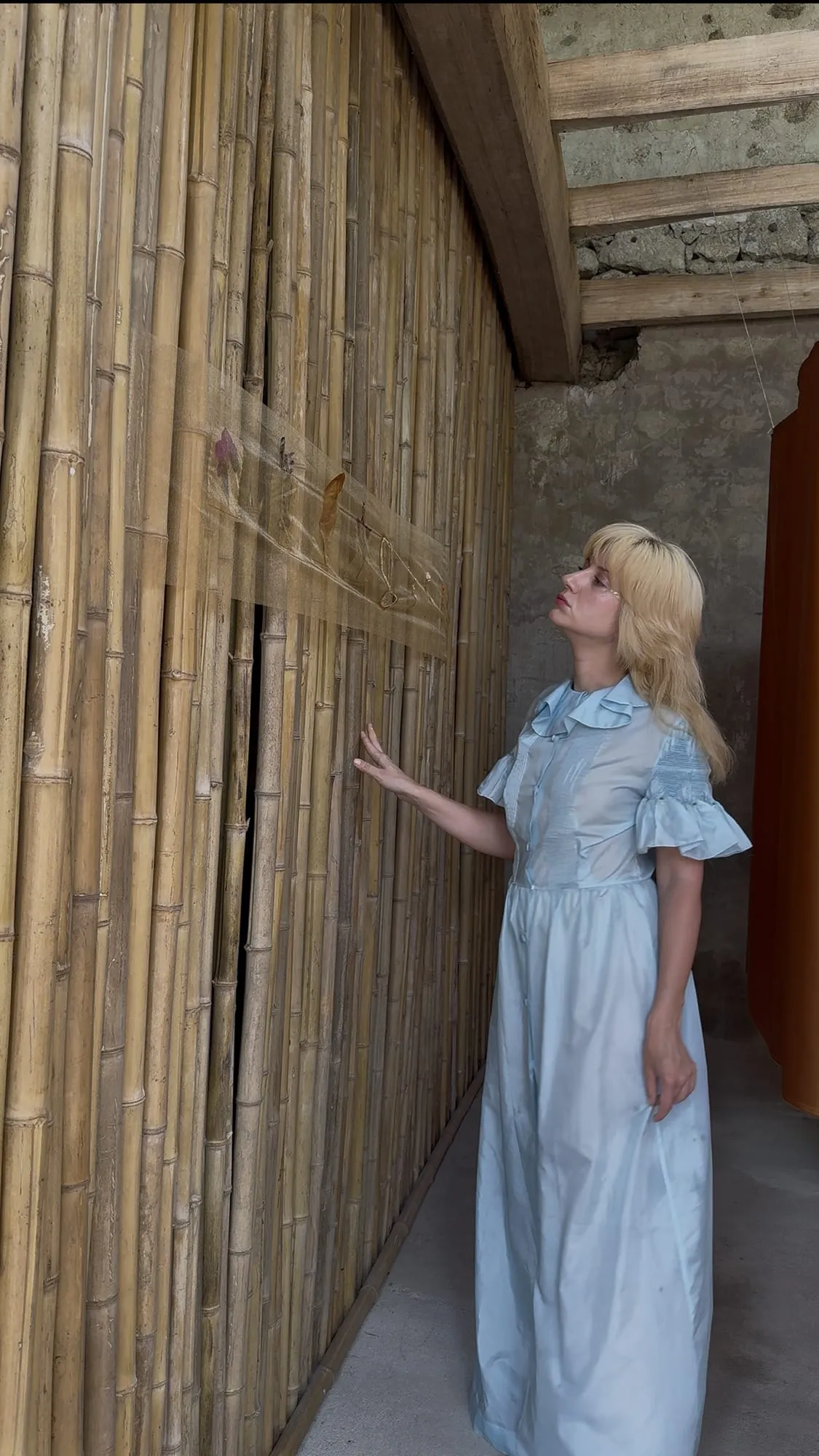
In between
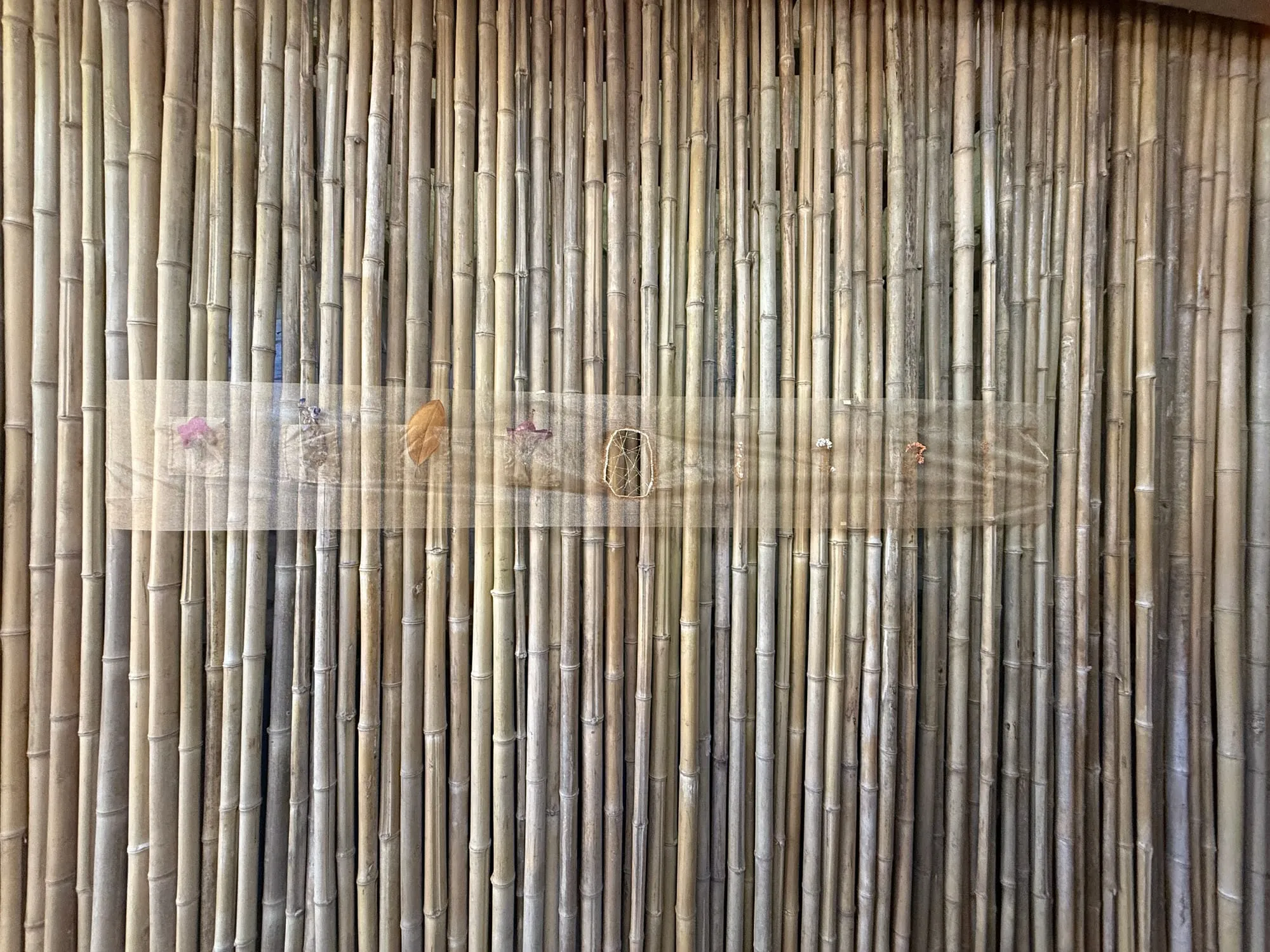
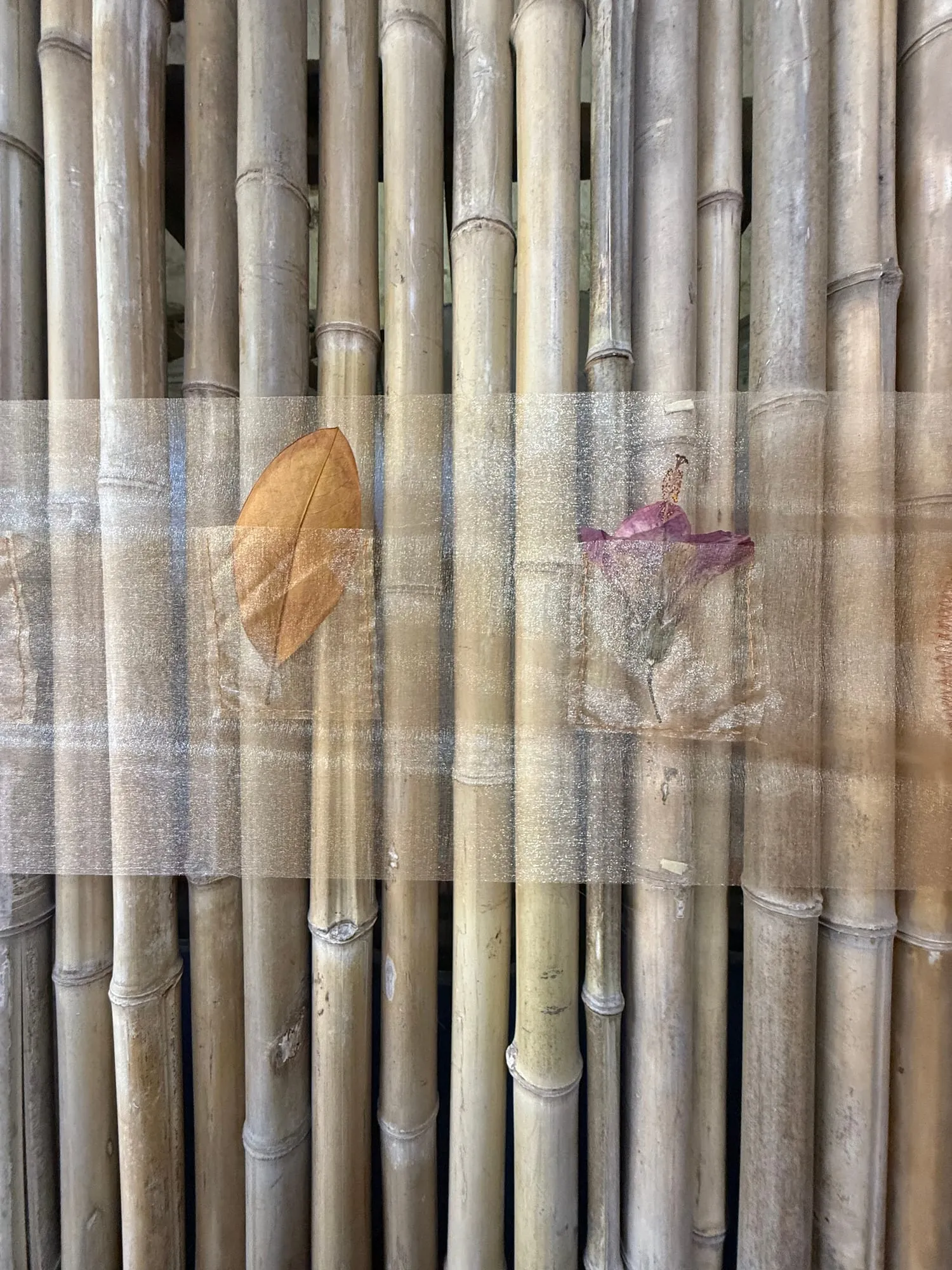
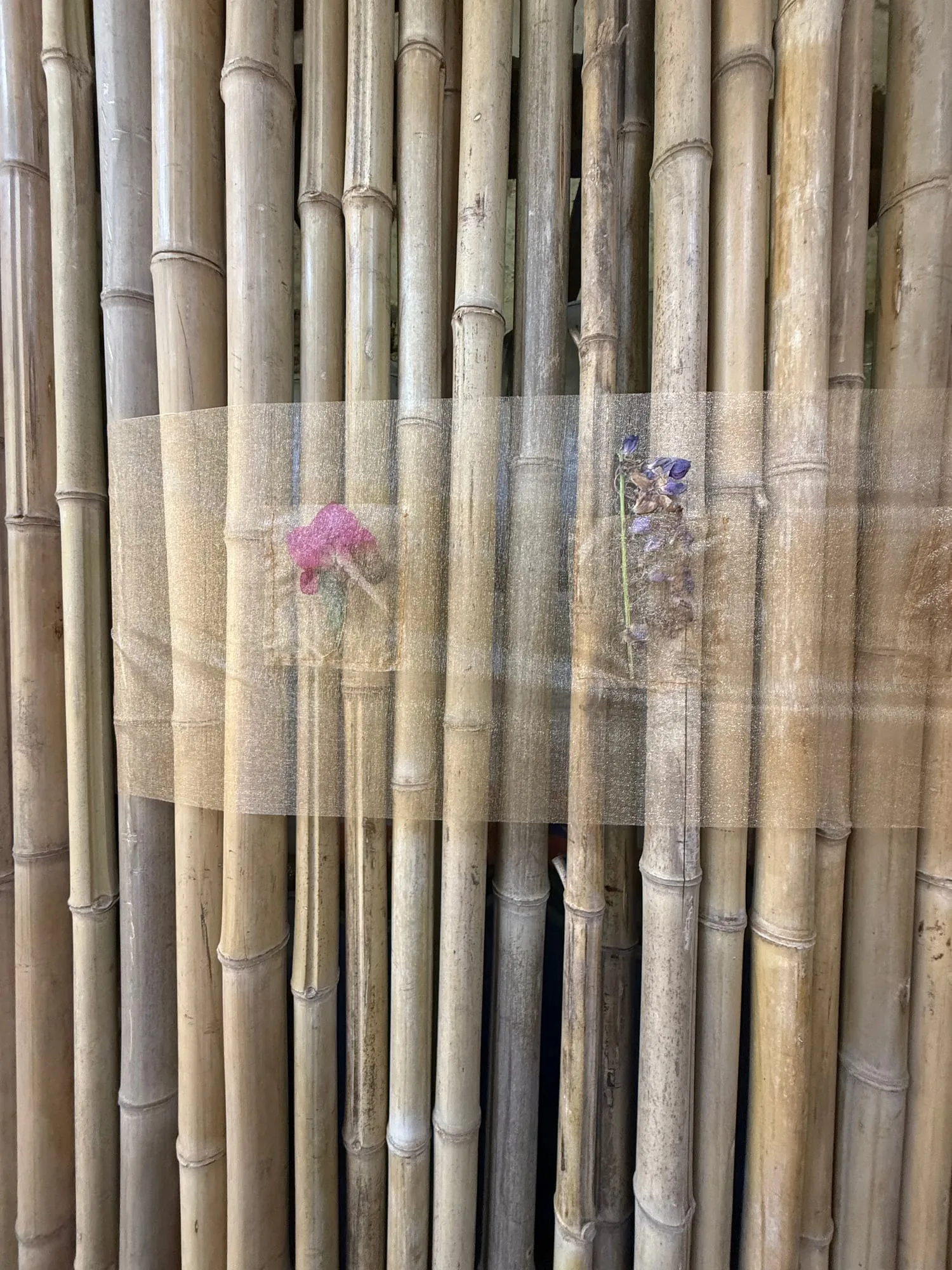
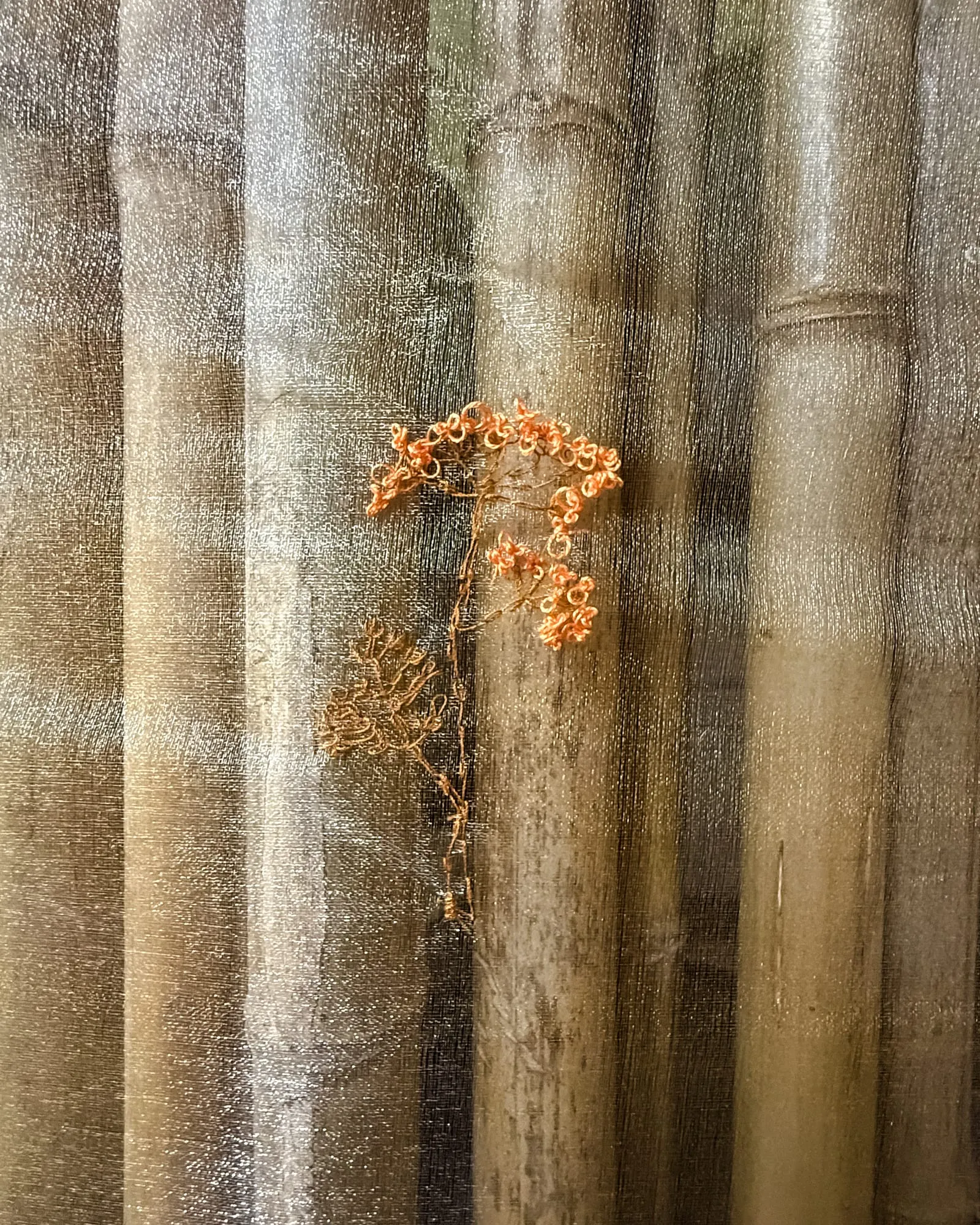
A line is stitched across it like a horizon: the left side is anchored by real dried flowers, faded and brittle, echoes of memory. On the right, embroidered blossoms bloom in thread, fragile symbols of imagined futures. But at the center, where your eye is drawn — there is nothing. A space left deliberately empty. This is where the present should be. But it is not.
We are always in motion — linguistically, mentally, emotionally. In most Indo-European languages, time is rendered spatially: the future lies "ahead," the past "behind." As cognitive scientists George Lakoff and Mark Johnson have shown, we live by metaphors — and our primary metaphors of time are rooted in direction, distance, and linearity. We march toward goals, leave things behind, look back, move forward. But where, then, is here?
Cognitive scientist Lera Boroditsky expands this idea across cultures, revealing that not all peoples conceptualize time in the same way. Some Aboriginal languages in Australia, for example, don’t use “left” or “right” but cardinal directions — and for them, time may move from east to west, not front to back. These linguistic frameworks shape perception — and trap us, too. For many of us, the present becomes an impossible location: invisible, unnameable, and uninhabited.
2025
Textile installation: organza, threads, dried flowers
Approximate size: 50 cm x 3m
The central empty space in this work becomes a metaphor for this philosophical paradox. The “now” is always slipping away — not because it’s truly absent, but because we are never there to meet it. As Merleau-Ponty and other phenomenologists describe, lived experience is never pure presence; it is layered with memory and anticipation, shaped by a body moving through a world it does not entirely possess.
This piece also draws from the concept of liminality, introduced by anthropologist Victor Turner — the in-between phase of rites of passage, where identity dissolves before being reformed. We live much of our lives in such liminal states: not quite who we were, not yet who we will become. But modern life has no rituals to hold us in this space. We resist the in-between. We race through it. We treat the now not as sacred but as a corridor — a passage to something more defined.
(Re)Swinging the Self
.png)
2024
Mixed media: organza, metallic threads, wire
Approximate size 250 cm x 50 cm x 50 cm
This project explores the complexity and fluidity of human emotions, inspired by the metamodern idea of oscillation between extremes—joy and sorrow, light and darkness, chaos and harmony. The work explores the way emotions and identity are dismantled and reassembled—how fragments of experience dissolve, intertwine, and form new configurations. Using organza as both medium and metaphor, I deconstruct personal emotional states, tracing the impact of relocation, memory, and transformation.
The organza panels feature gradient colors, transitioning from soft, light tones to deep, dark shades. The lighter areas represent joyful and uplifting feelings, while the darker ones reflect complex and heavy emotions. Each panel are embroidered with words that capture the nuances of these states. Suspended from the ceiling, they appear to float, creating the impression of emotions in constant motion. As air flows through the installation, the panels sway, alternately bringing light or dark sections to the forefront—just as in life, joy and sorrow continuously replace one another.
As a relocated person, I exist in the liminal space between places, cultures, and versions of self. My work embodies this continual negotiation—an attempt to piece together something coherent from fragments of belonging and displacement. Organza, a material that is both delicate and resilient, serves as a perfect analogy for this process: transparent, mutable, and capable of holding intricate detail while remaining fluid and ever-changing.
This project invites the viewer into a space of transition—where deconstruction is not destruction but an act of becoming, and reconstruction is not a return to the old, but an embrace of the evolving self. It is a meditation on how we unravel, adapt, and find new ways to exist within shifting landscapes.
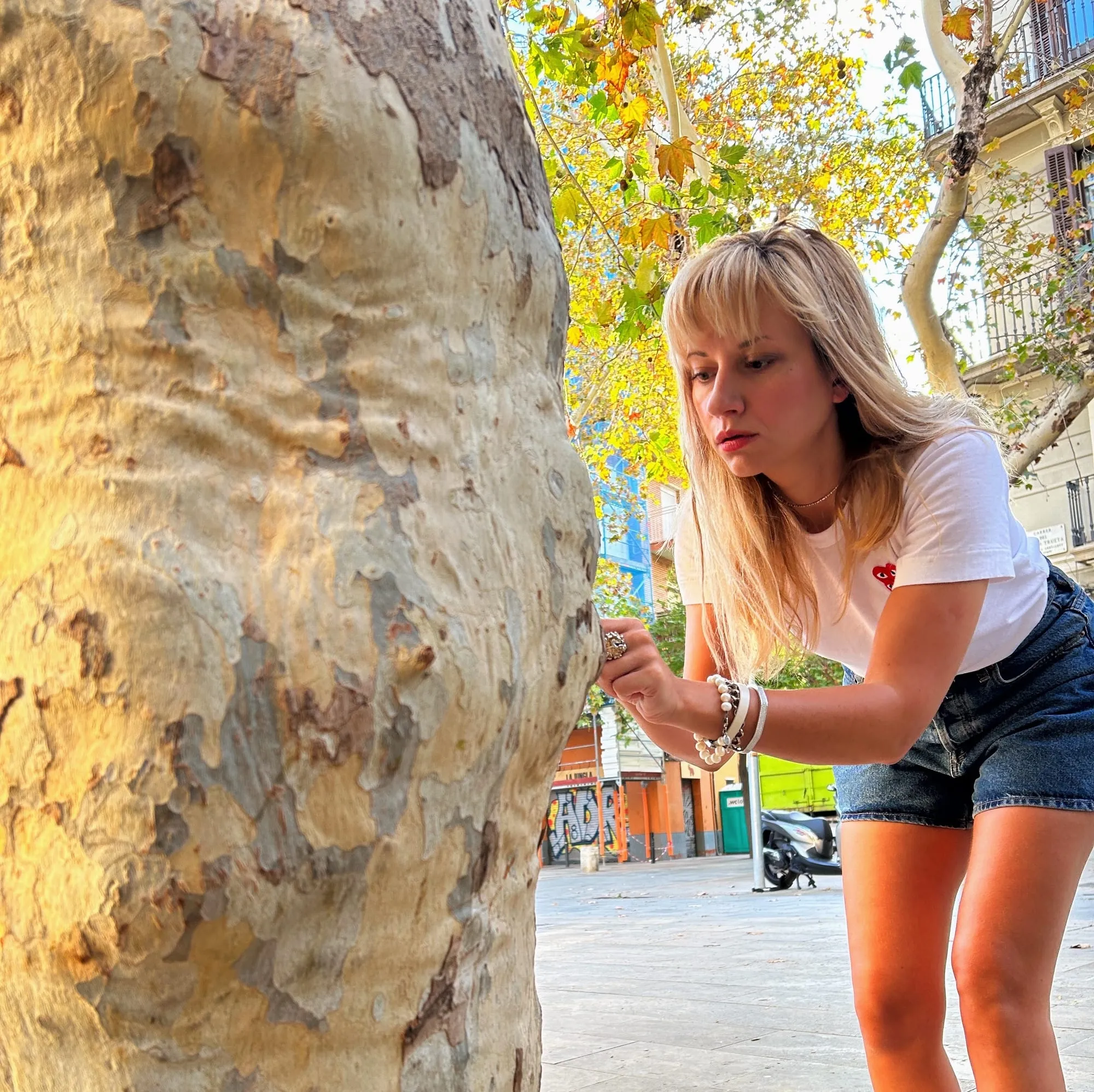
Lost & found
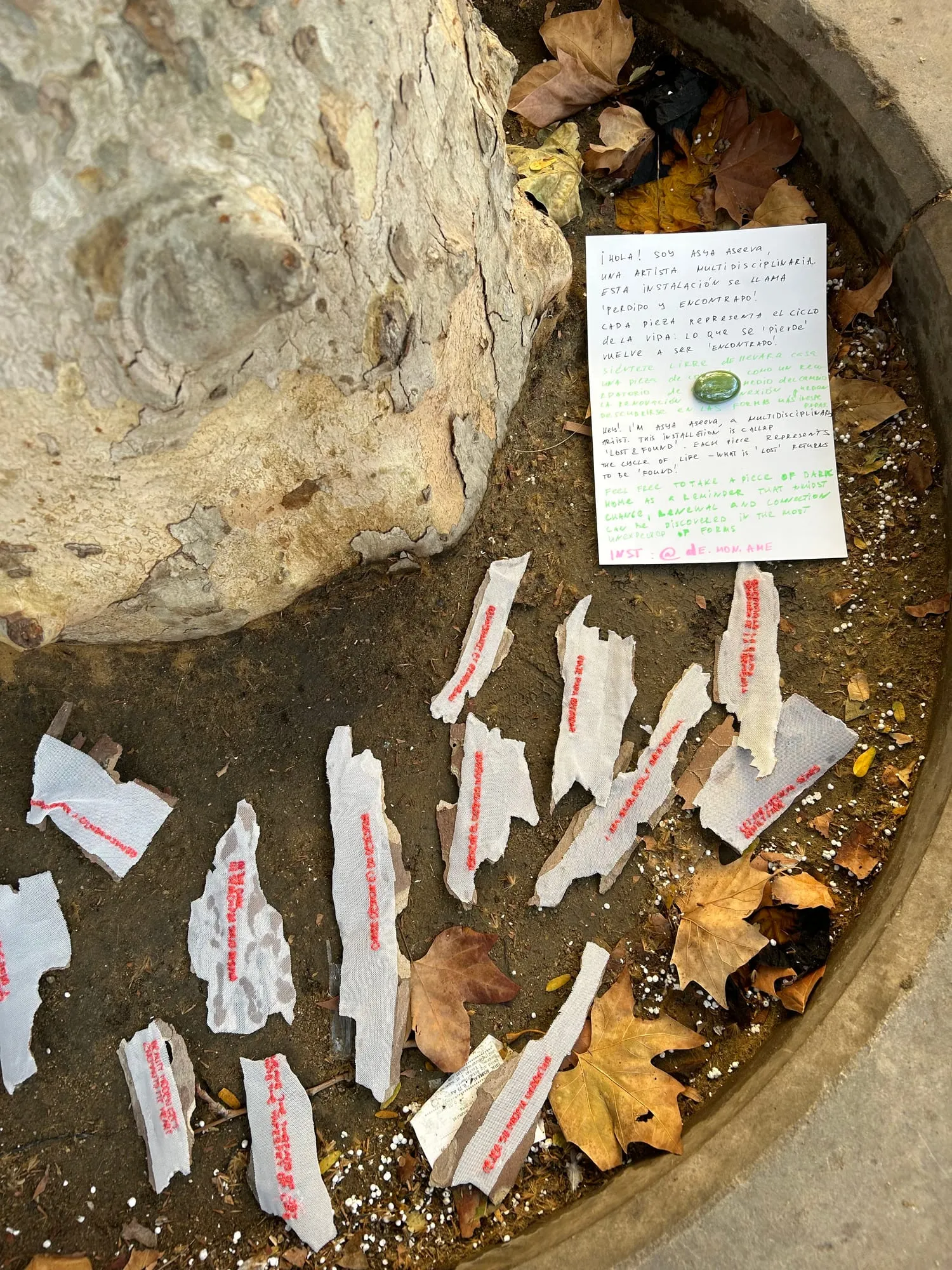
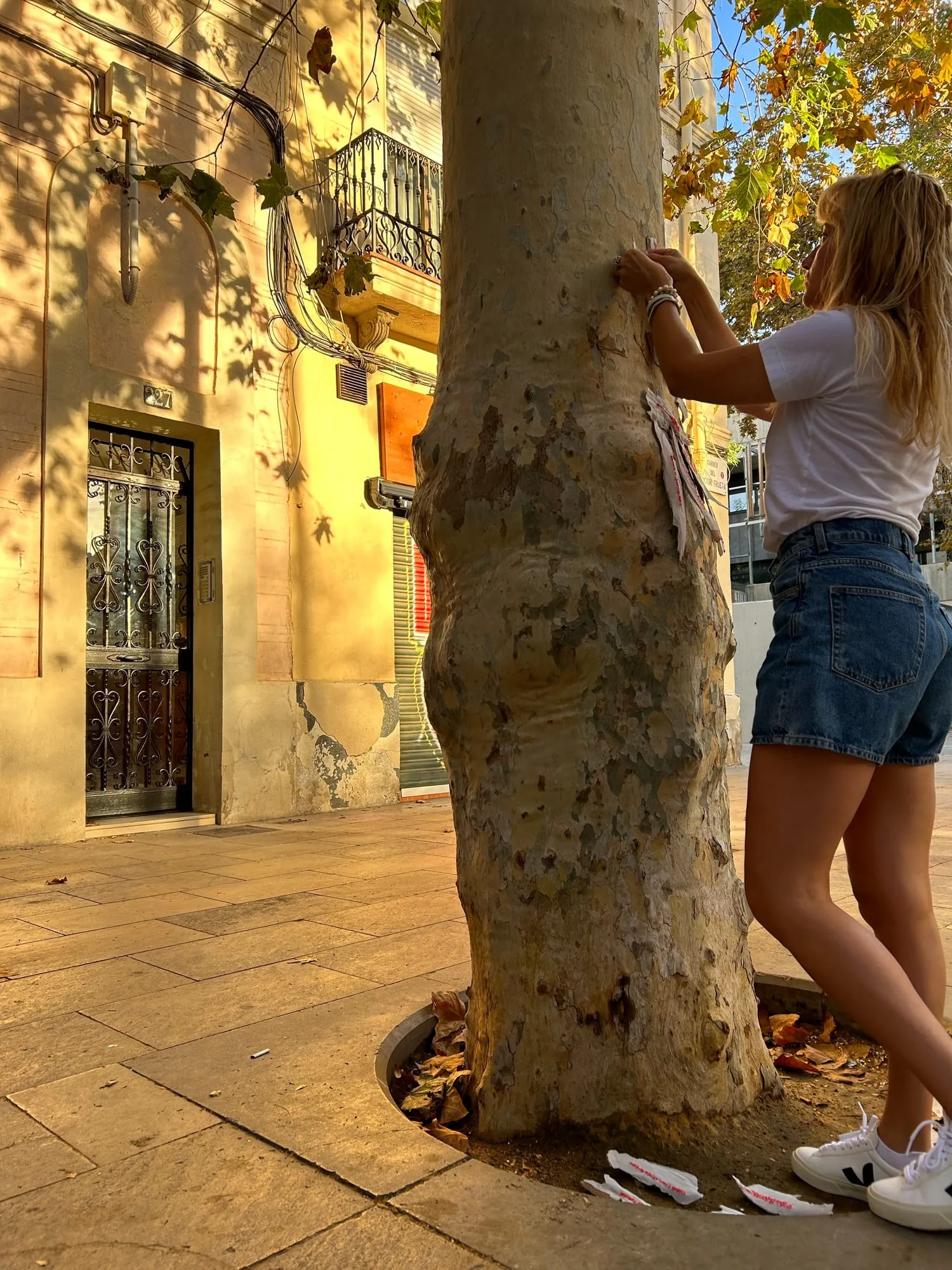
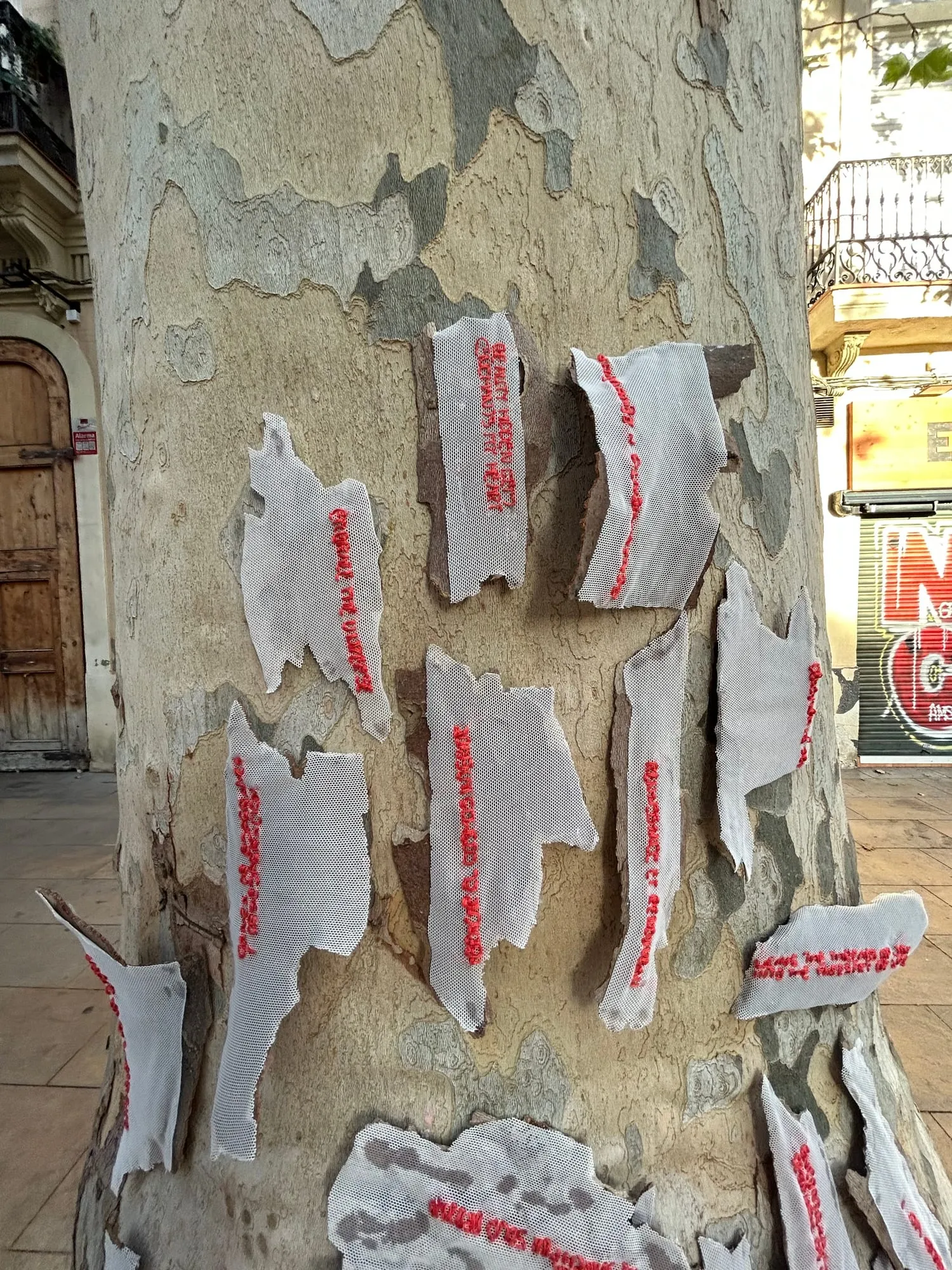
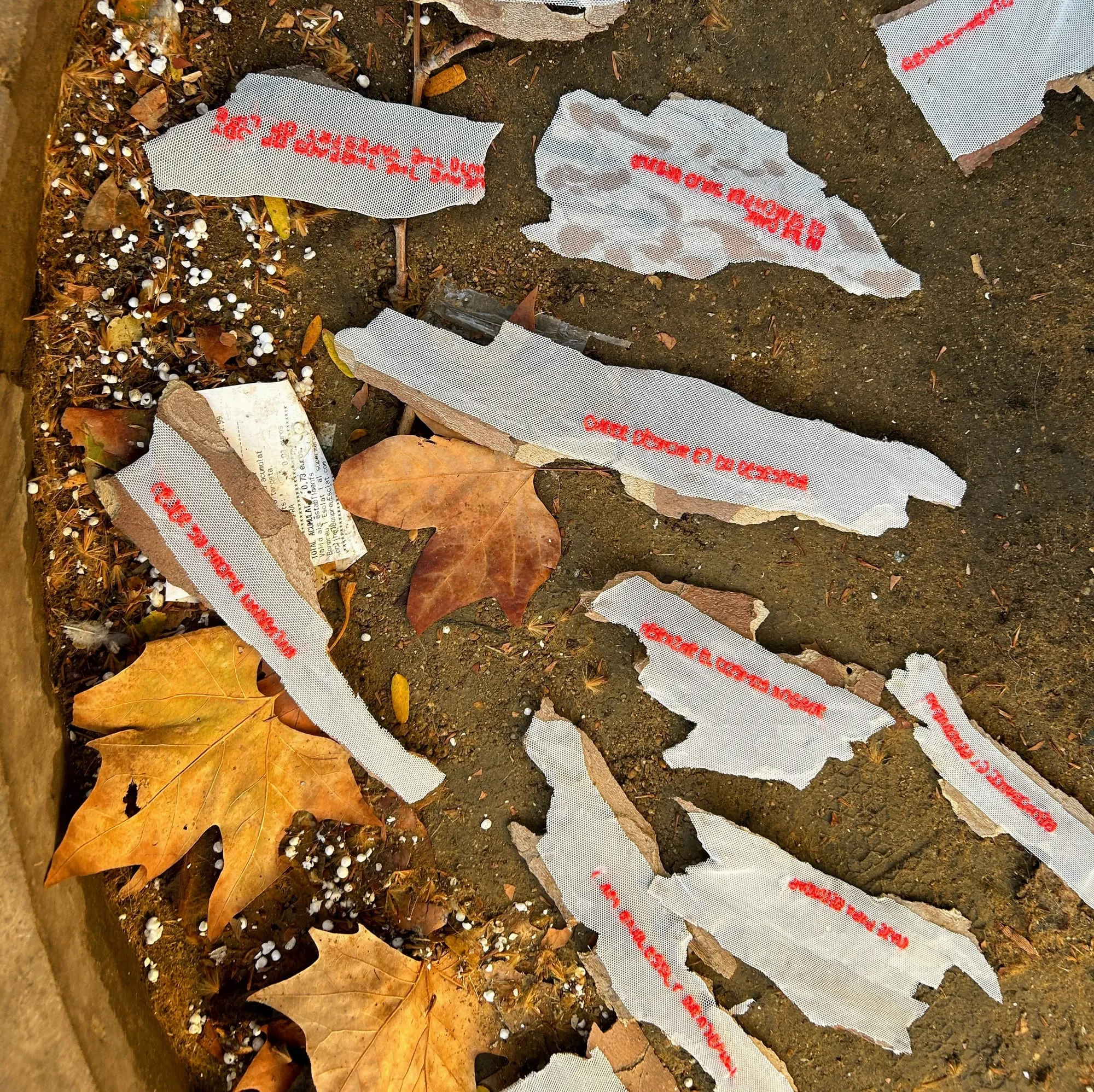
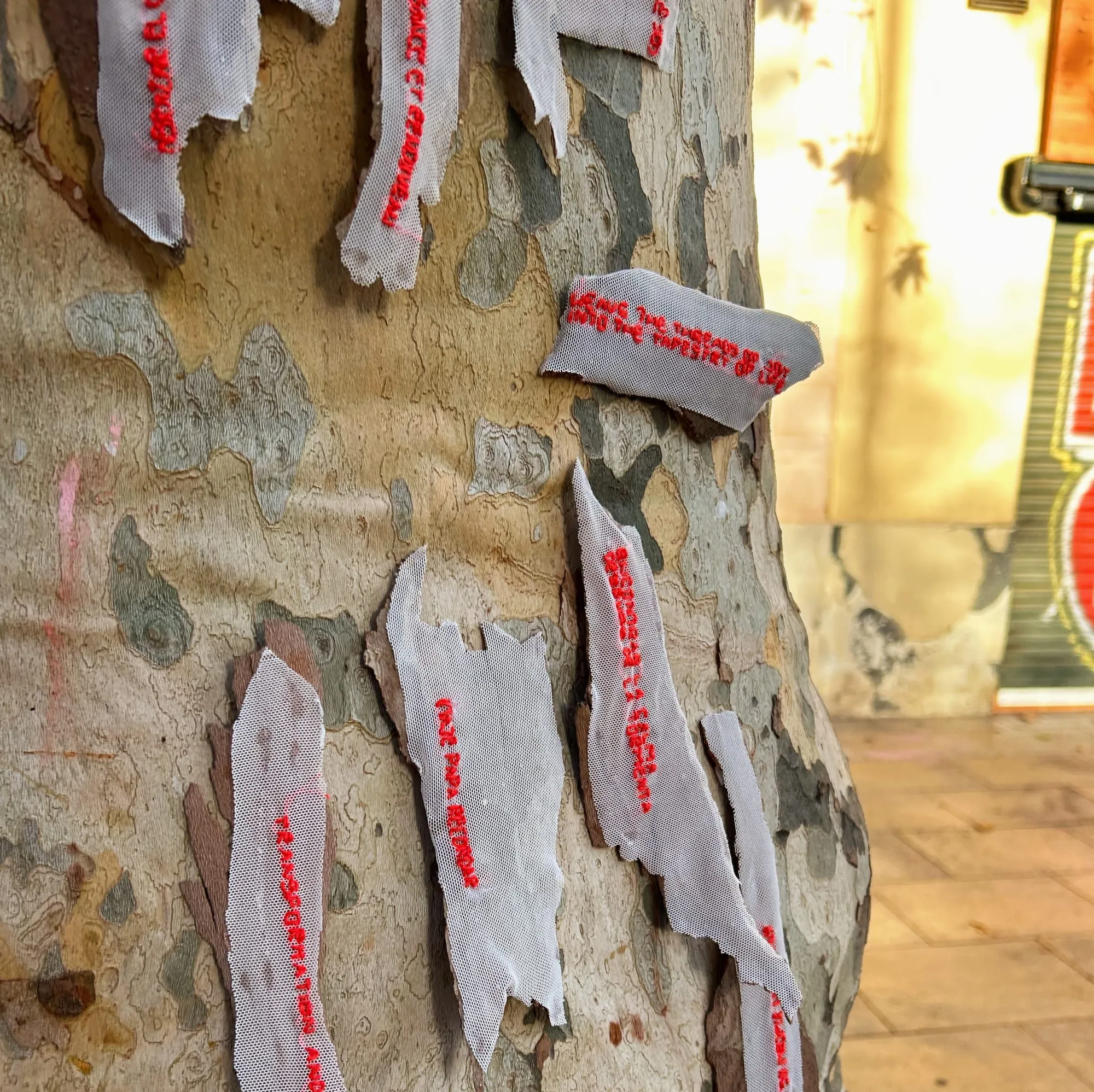
"Lost & Found" is an art installation that transforms the ephemeral into a profound philosophical reflection. Crafted from fallen tree bark, the work symbolizes the delicate fragility of nature, its transient beauty captured in the organic material. Upon these natural fragments, fabric and embroidered messages in three languages express a universal sense of unity, transcending cultural and linguistic boundaries.
This fusion of organic and human-made materials highlights the cyclical nature of existence: what is ‘lost’ in one form is ‘found’ in another. The act of returning these bark fragments to their source, the trees, serves as a poignant acknowledgment of our interconnectedness with the world around us. The work invites viewers to contemplate their role within this intricate web of life and nature’s resilience.
"Lost & Found" prompts introspection on the interplay between humanity and the natural world, reminding us that in the midst of loss and change, there is always the potential for renewal. Through this delicate balance of fragility and strength, the installation offers a quiet but powerful reflection on how connection and transformation can be discovered in the most unexpected places.
2023
Mixed media.
tree bark, canvas, threads
Dimensions vary
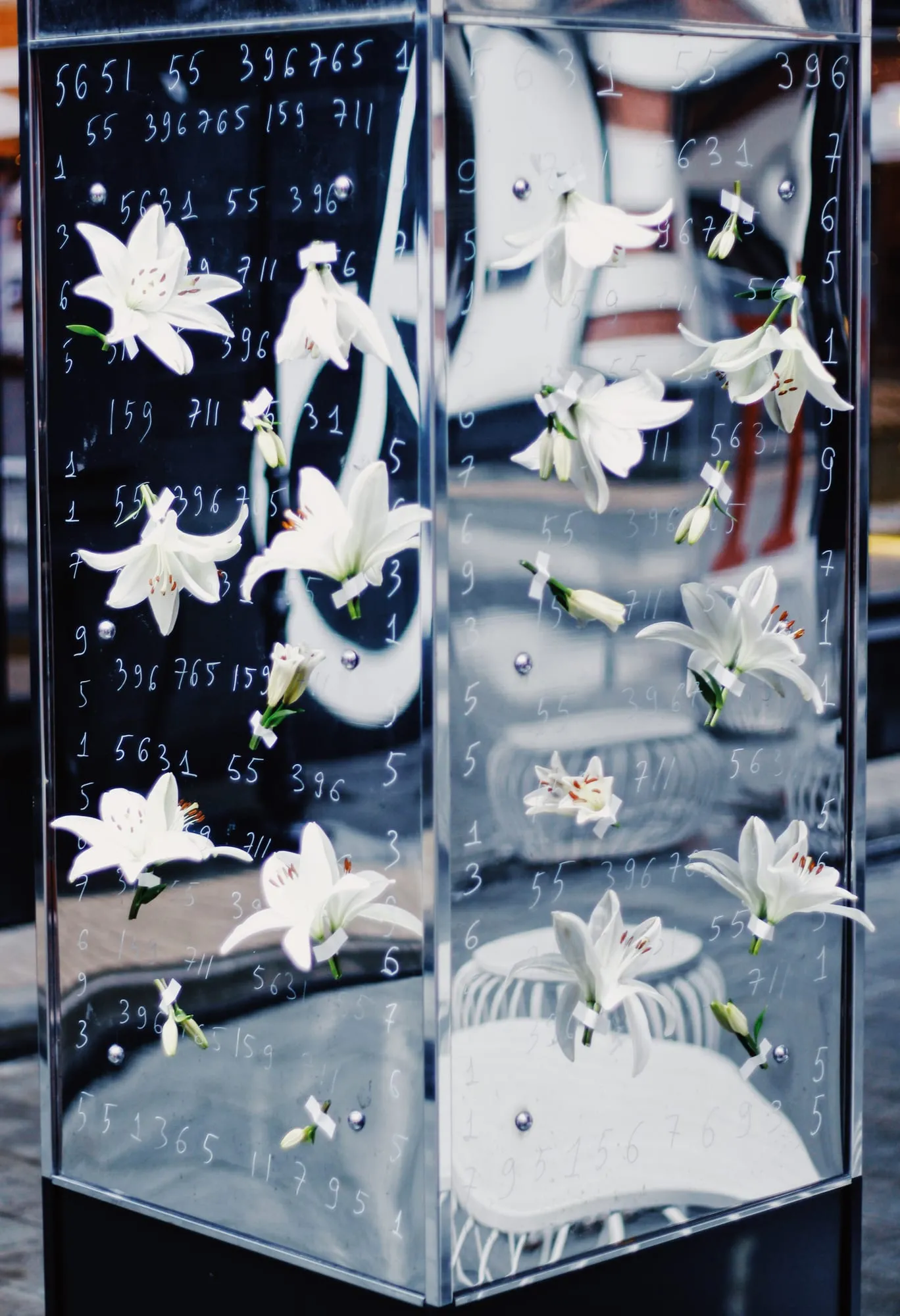
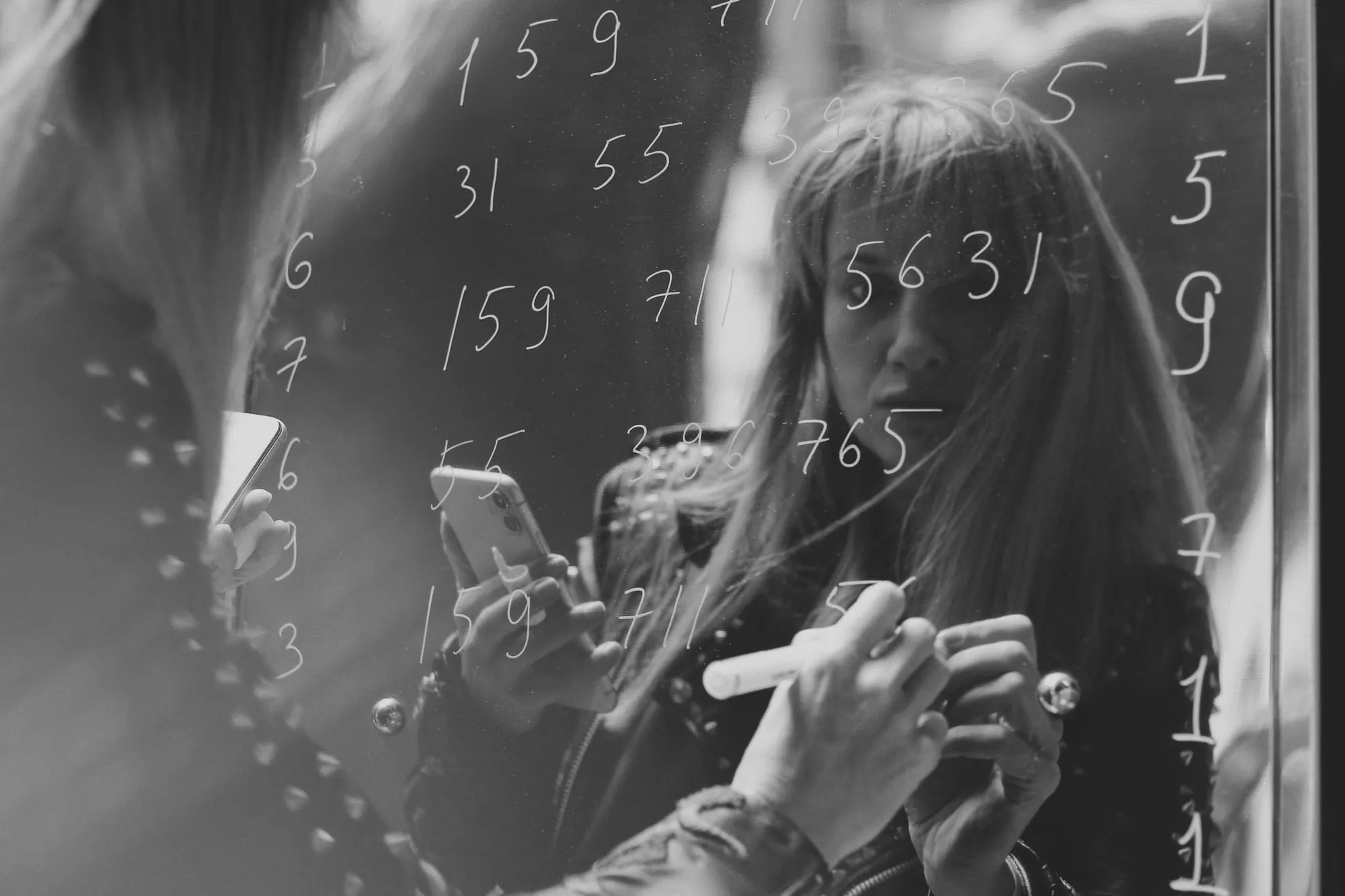
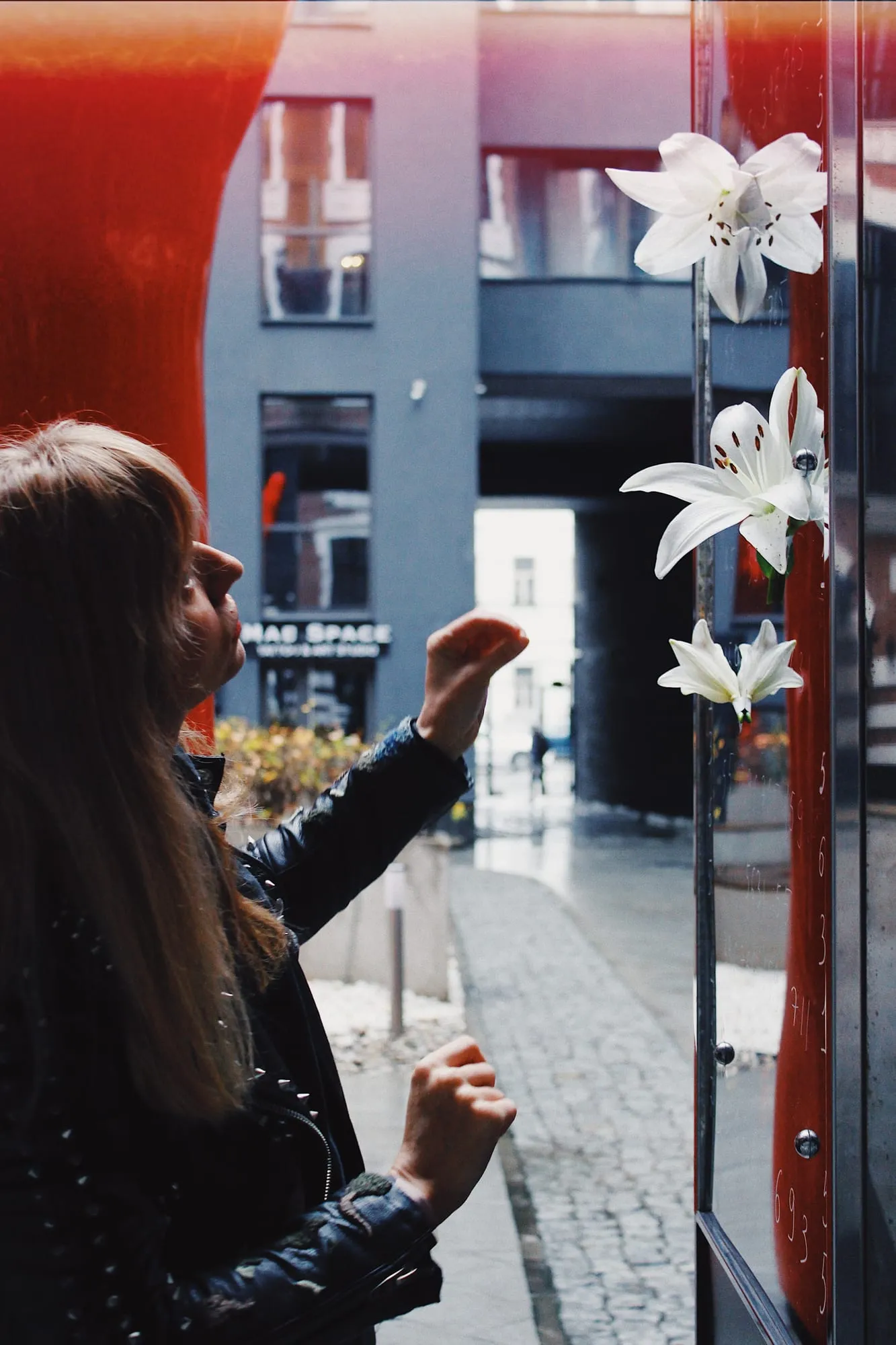
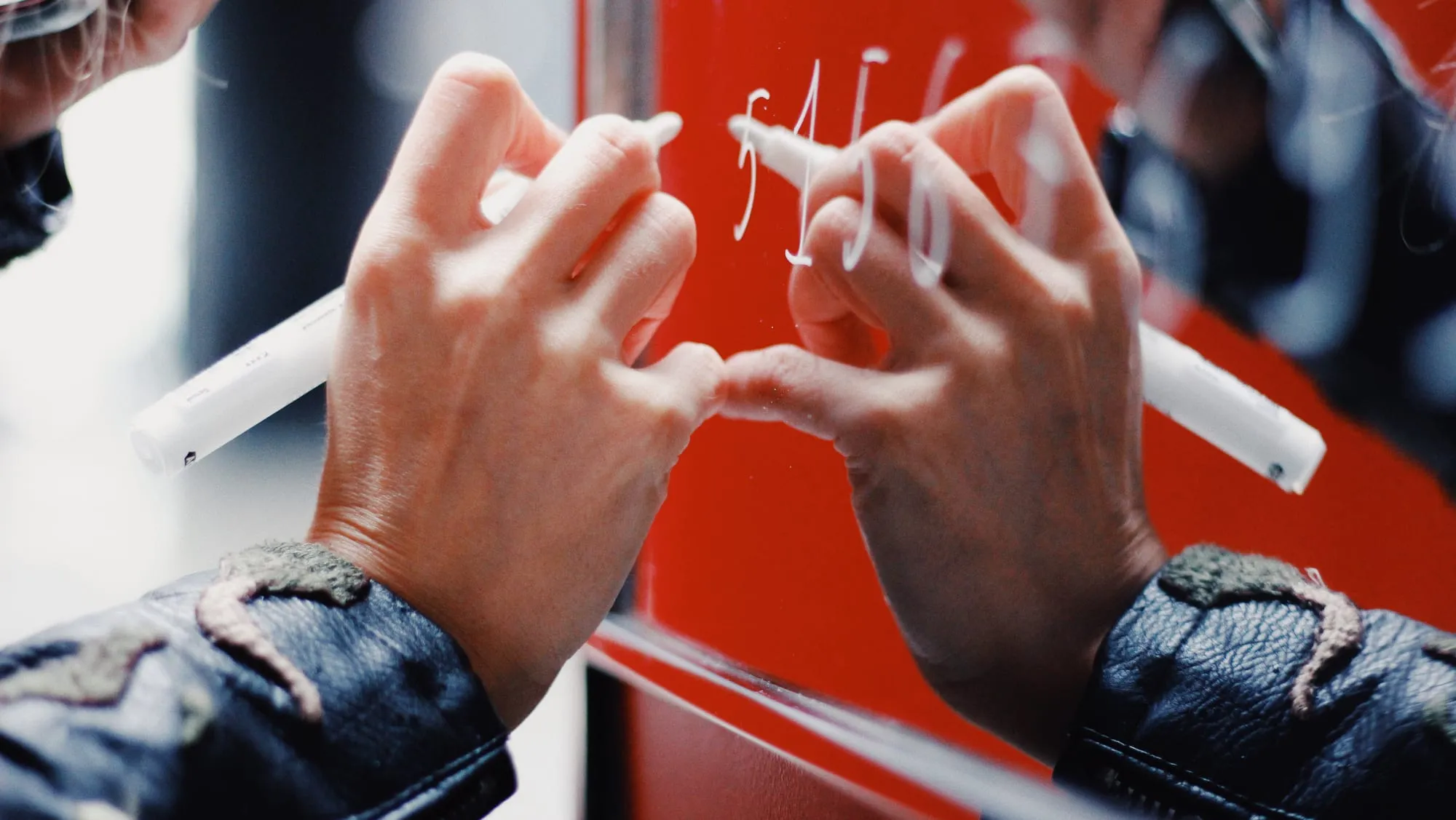
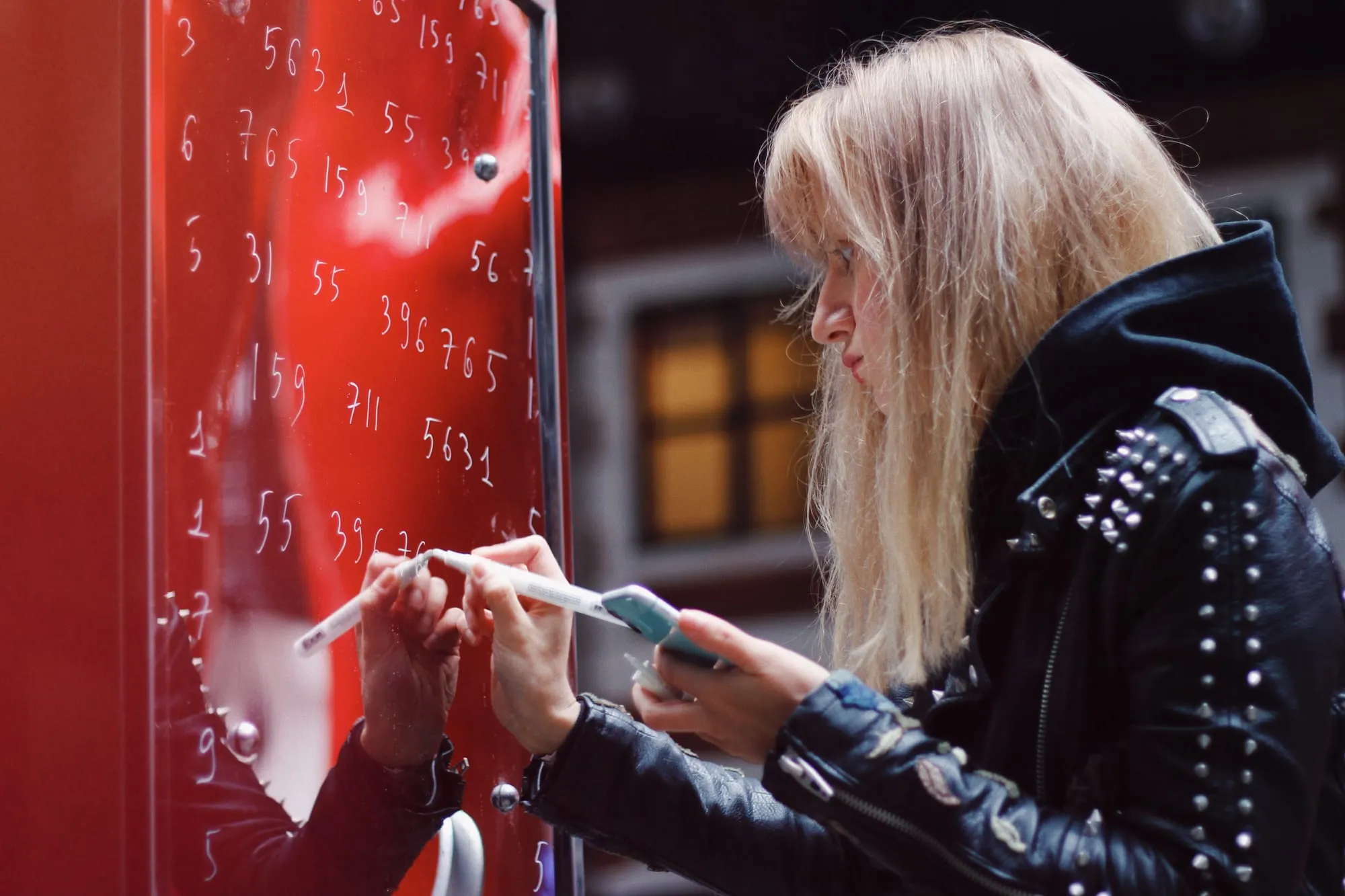
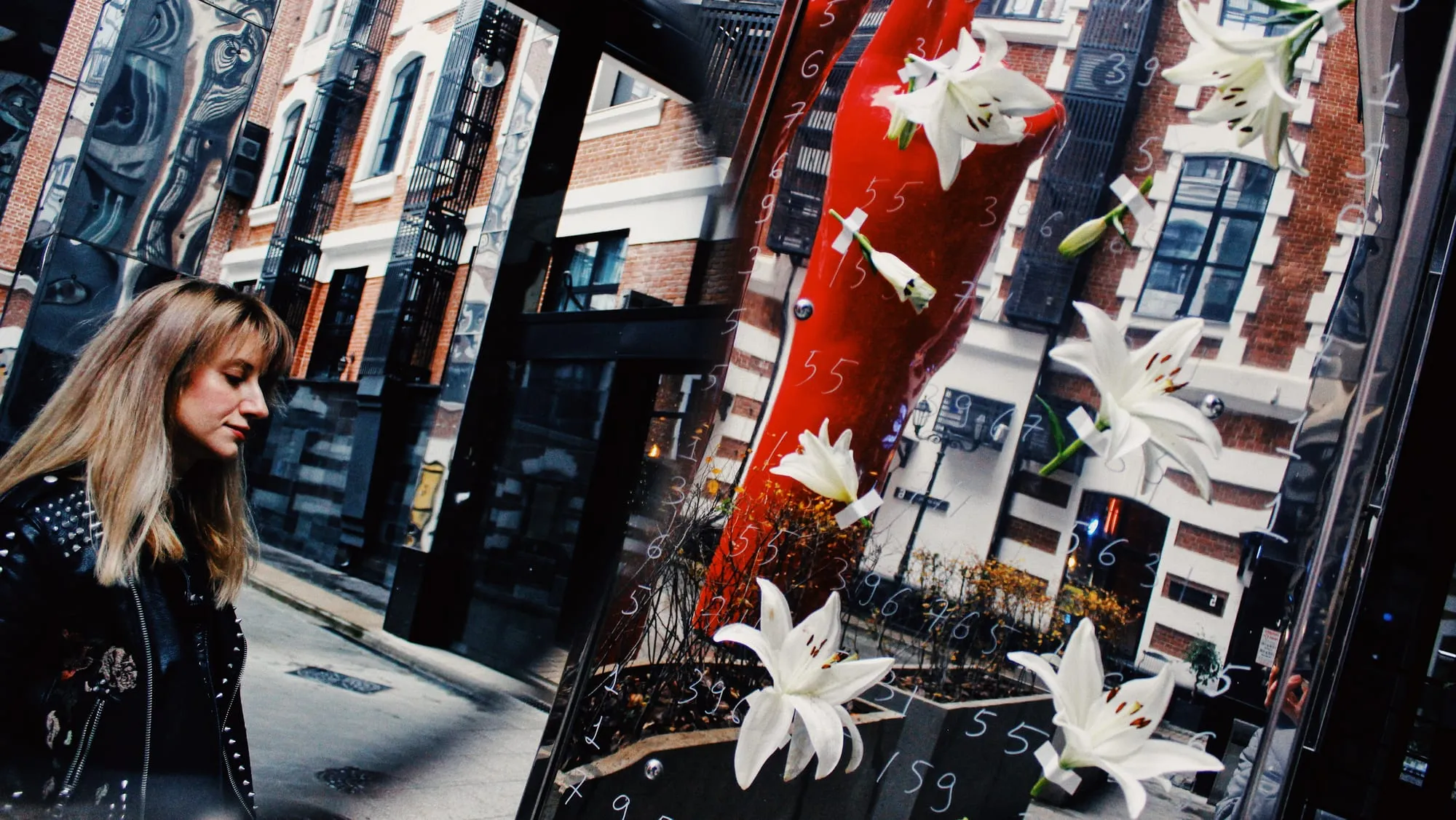
5631 55 396765159 711
Numbers - a numerological reading of the phrase Josephine Peladan, a magician, literary scholar, proto-curator of the late nineteenth and early twentieth century, who argued a lot about the decline of civilization, the catastrophic consequences of the first world war and political pressures.
Nous ne croyons ni au progress ni au salut - we believe neither in progress nor in salvation.
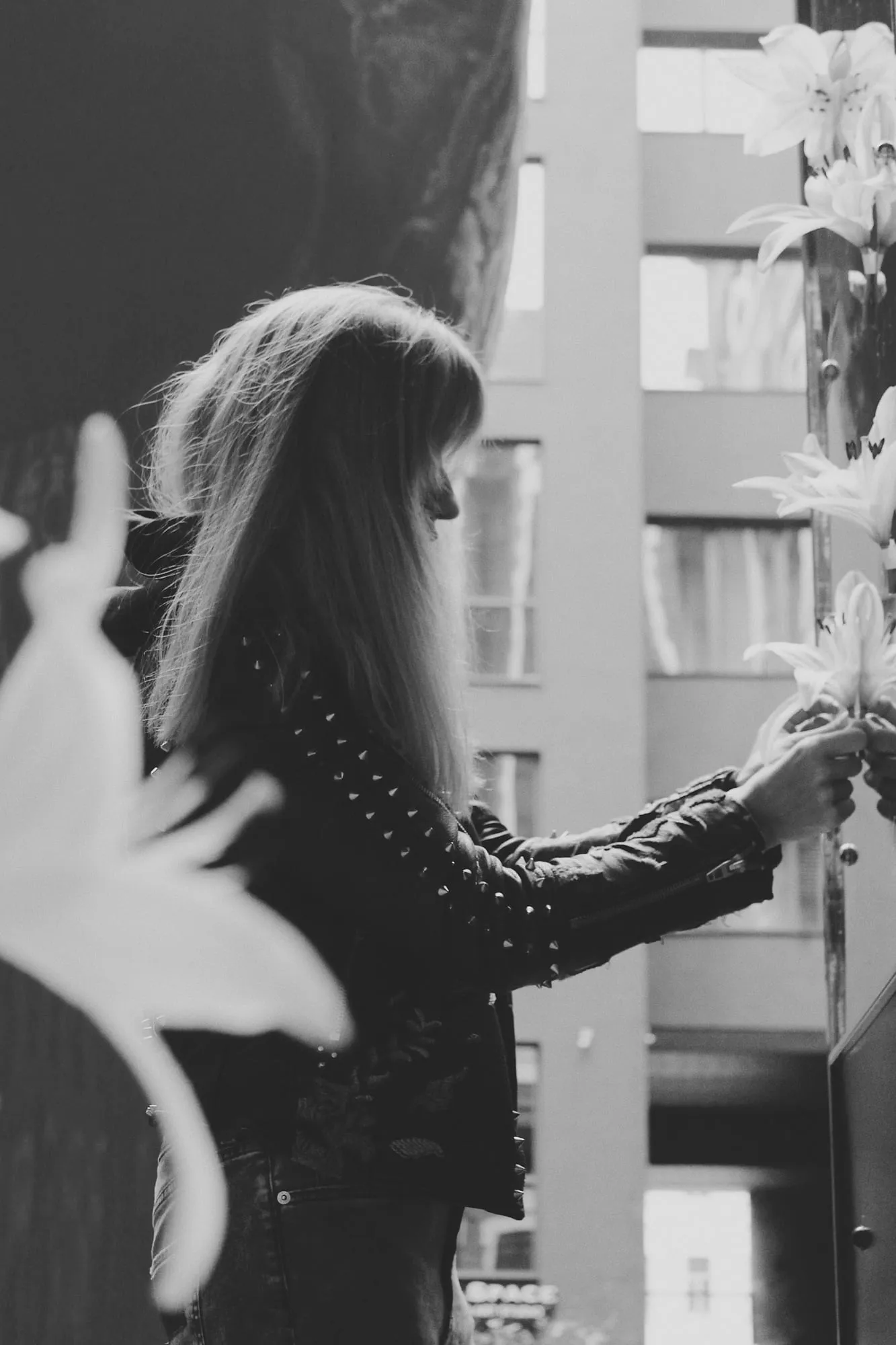
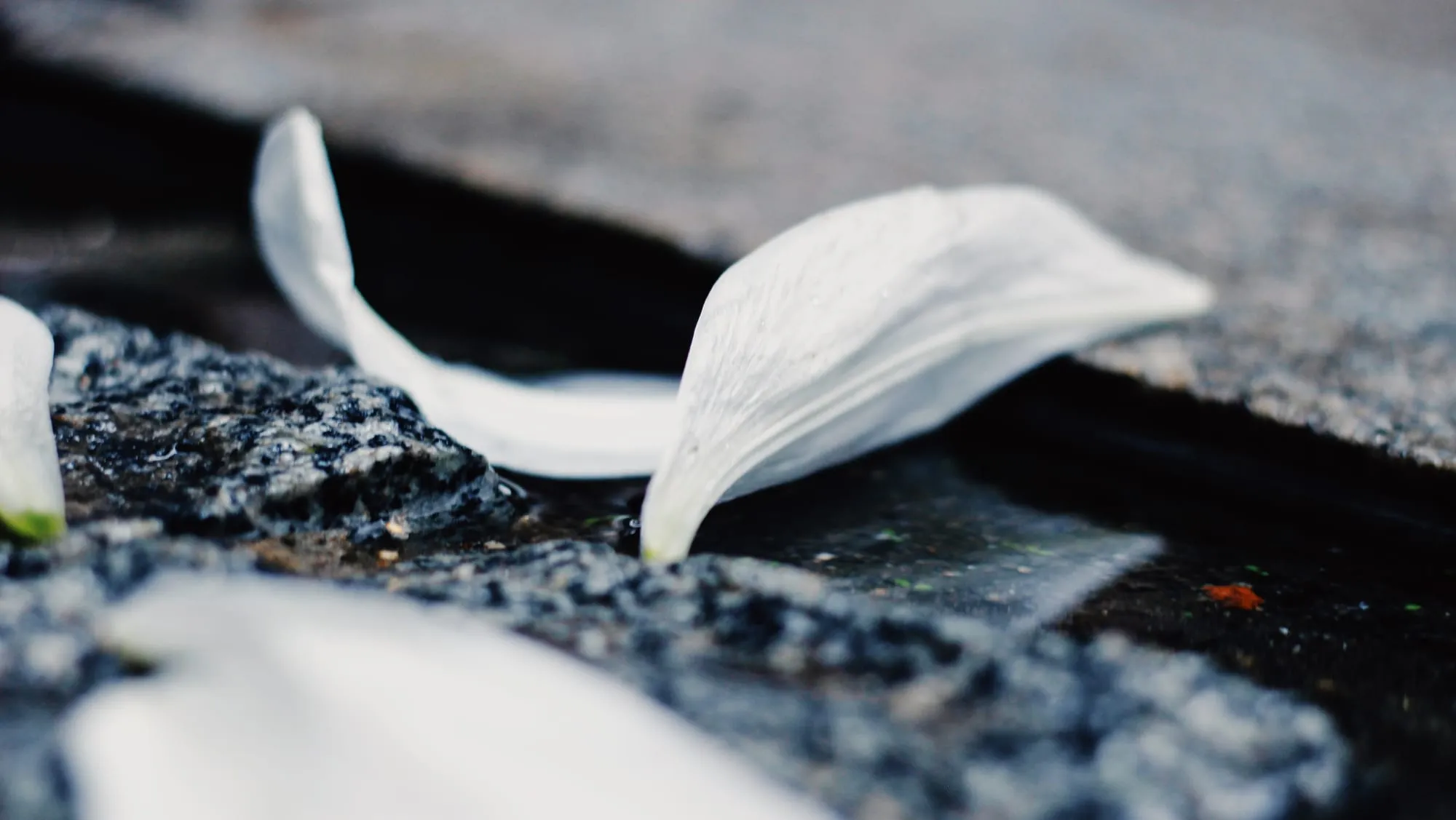
Lilies are placed on the surface, a peculiar reference to Oscar Wilde's portrayal of Peladan. The lily, on the one hand symbolizes purity and innocence, the early Christians believed that the lily sprouted from the tears of Eve, who leaving paradise. The second meaning of the lily is death. At the end of the of the installation, the lilies wilted.
2022
Mixed media: flowers, paper
Approximate size 120 x 200 cm
Photos by Nailia Muhametzyanova
@nailia_mova_art
Selected works are available for acquisition — get in touch.